

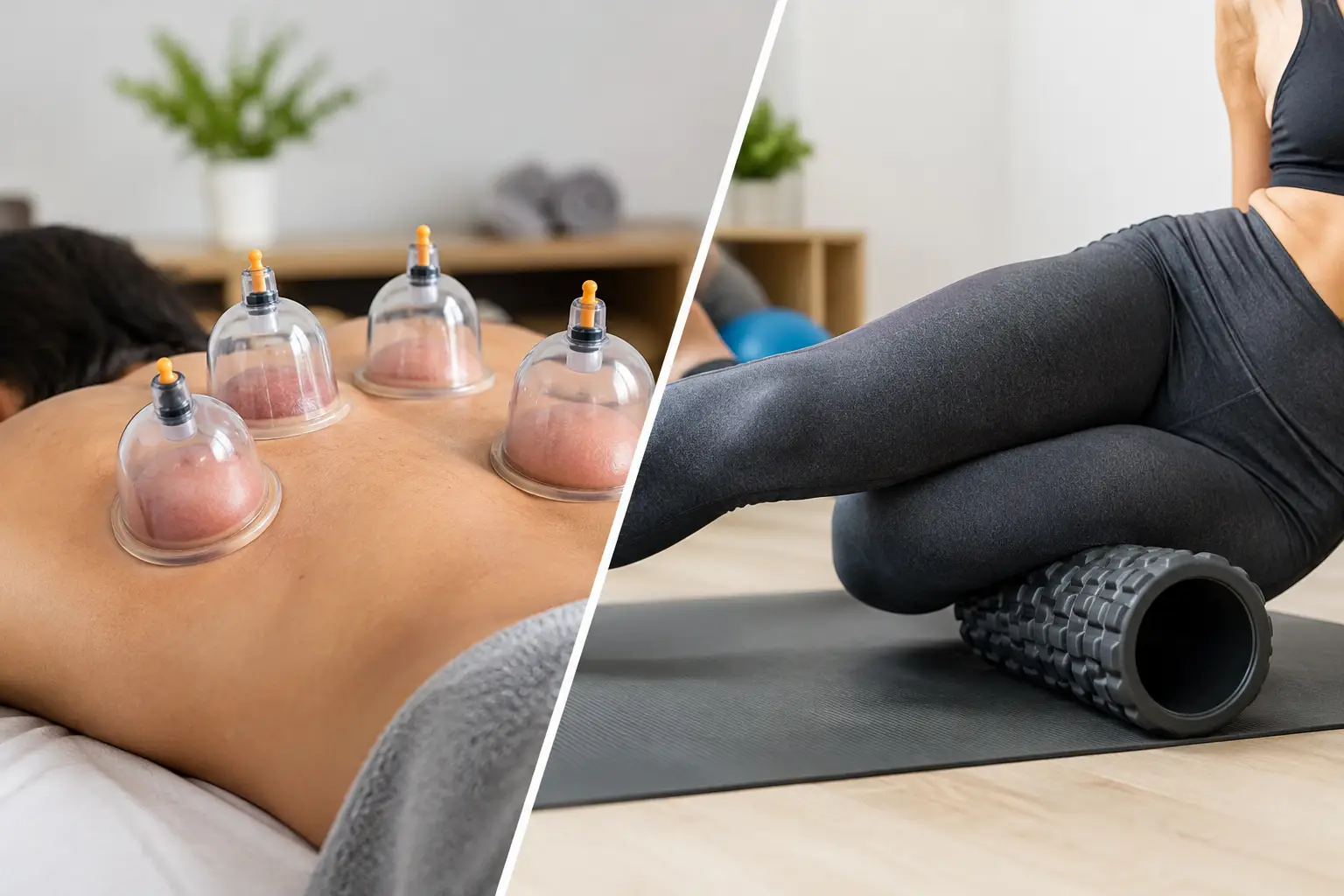
A tight upper back after hours at a desk, sore calves after a long walk, or a stubborn shoulder that will not quite loosen up can make even ordinary movement feel like work. Cupping versus foam rolling is a common question because both approaches may help you feel less restricted, but they create that relief in very different ways. The best choice depends on where you are hurting, what your body tolerates, and whether you need self-care, hands-on support, or both.
Neither option should be treated as a shortcut around the bigger picture. Persistent pain, recurring stiffness, movement limitations, posture habits, stress, sleep, prior injuries, and training demands can all shape how your body feels. A thoughtful plan looks beyond one tight muscle to help you move more comfortably and support lasting well-being.
Cupping versus foam rolling: the key difference
Foam rolling is a self-care technique that uses your body weight against a firm cylinder or ball. You slowly roll over an area such as the thighs, glutes, upper back, or calves, applying pressure to the tissue below the skin. It is accessible, portable, and easy to include after a workout or during a break from sitting.
Cupping therapy uses specially designed cups to create gentle suction on the skin. Rather than applying downward pressure, the cup lifts the skin and superficial tissue upward. A trained provider may place cups in one area for several minutes or glide them carefully across the skin, depending on your comfort and goals.
That difference matters. Foam rolling can feel direct and compressive, especially over a sensitive area. Cupping often feels like a pulling or stretching sensation. Some people find that more comfortable around areas where pressure feels too intense, while others prefer the control and familiarity of rolling at home.
Both methods may temporarily reduce the sensation of tightness and help improve range of motion. They do not literally erase scar tissue, break up every “knot,” or correct the source of pain on their own. Think of them as supportive tools that can make movement feel easier while you address the habits, mobility needs, strength, and alignment concerns that affect your body day after day.
When foam rolling may be a good fit
Foam rolling can be useful for active adults who want a simple way to warm up before exercise or settle down after activity. A brief, gentle session may help you feel more prepared for movement, especially when paired with dynamic stretching and a gradual warm-up.
It can also be practical for people who notice general muscle stiffness from sitting, driving, parenting, or repetitive work. For example, a person with tight-feeling glutes after a long commute may use a foam roller for a minute or two, then follow it with a few comfortable hip movements. The goal is not to push through sharp pain. It is to give your body a calm, manageable input and see whether movement improves.
Technique makes a difference. Rolling quickly and aggressively may leave you more guarded or sore. Use slow passes, moderate pressure, and relaxed breathing. Stay away from rolling directly over joints, the low back, the front or side of the neck, bony areas, open skin, and any spot that produces numbness, tingling, burning, or sharp pain.
A foam roller may not be the best choice when the area is highly inflamed, bruised, acutely injured, or extremely tender. If you have varicose veins, a bleeding disorder, reduced sensation, osteoporosis, are taking blood-thinning medication, or have a medical condition that affects circulation, ask a qualified health professional before making foam rolling part of your routine.
When professional cupping may be helpful
Cupping is often chosen by people who want guided care for muscle tension, restricted movement, or areas that feel uncomfortable with direct pressure. During a personalized visit, a provider can consider your health history, symptoms, posture, movement patterns, and comfort level before deciding whether cupping belongs in your care plan.
Many patients appreciate cupping as an addition to gentle chiropractic care, postural analysis, mobility work, and practical guidance for daily movement. Someone with upper-back tension from computer work, for instance, may benefit from more than temporary relief in one spot. Looking at workstation habits, spinal mobility, shoulder movement, and recovery routines can create a more useful path forward.
Cupping can leave circular red, purple, or darker marks that resemble bruises. These marks are a common response to suction and usually fade over several days to two weeks, though timing varies from person to person. They should not be painful or alarming, but it is wise to schedule thoughtfully if you have an upcoming event or prefer to keep the area covered.
Cupping is not appropriate for every situation. It may need to be avoided or modified over broken or irritated skin, rashes, sunburn, active infection, certain blood vessel concerns, or areas with a recent injury. People who are pregnant, use anticoagulants, have a bleeding condition, have a history of blood clots, or are managing a complex medical condition should discuss safety with their health care team before treatment.
Which one offers better results?
There is no universal winner. Research on both cupping and foam rolling suggests they may offer short-term benefits for flexibility, discomfort, and perceived muscle recovery in some people. The research is still developing, and results vary based on the condition being treated, the technique used, and the individual. Neither treatment promises a cure for chronic pain or an injury.
For many people, foam rolling wins on convenience. You can use it at home, control the pressure, and build it into a regular routine without an appointment. It is a useful option when your symptoms are mild, predictable, and responsive to gentle movement.
Cupping may be more valuable when you are unsure why discomfort keeps returning, have a sensitive area that does not tolerate compression, or want a professional to assess the broader pattern behind your symptoms. The value is not only in the cups themselves. It is in the careful evaluation and individualized recommendations that surround the treatment.
It is also completely reasonable to use both. You might receive cupping as part of an in-office plan, then use a foam roller lightly between visits for areas your provider has shown you how to address. Your response matters more than following a trend. If a tool leaves you feeling worse for more than a day, causes bruising beyond what you expected, or changes the quality of your symptoms, pause and seek guidance.
Building a plan that supports your whole body
Lasting comfort usually comes from combining the right treatments with small, sustainable changes. Movement breaks during the workday, a more supportive desk setup, strength work that fits your ability, consistent sleep, hydration, and stress management can all influence muscle tension and recovery. The right plan should feel realistic for your life, not like another demanding task on your schedule.
At Whole Health Chiropractic, care begins with listening to what your body has been telling you. Whether cupping, gentle spinal adjustments, postural analysis, or guided movement support is appropriate, the focus is on helping you feel heard, move with greater confidence, and make progress toward your own goals.
If pain is severe, follows a fall or accident, comes with weakness or numbness, spreads down an arm or leg, or is paired with fever, unexplained weight loss, chest pain, or changes in bladder or bowel control, seek prompt medical evaluation rather than relying on home recovery tools.
The most helpful choice is the one that respects your comfort and helps you return to the activities that matter to you. Start gently, pay attention to how your body responds, and consider a personalized consultation when stiffness or pain is keeping you from feeling your best.