

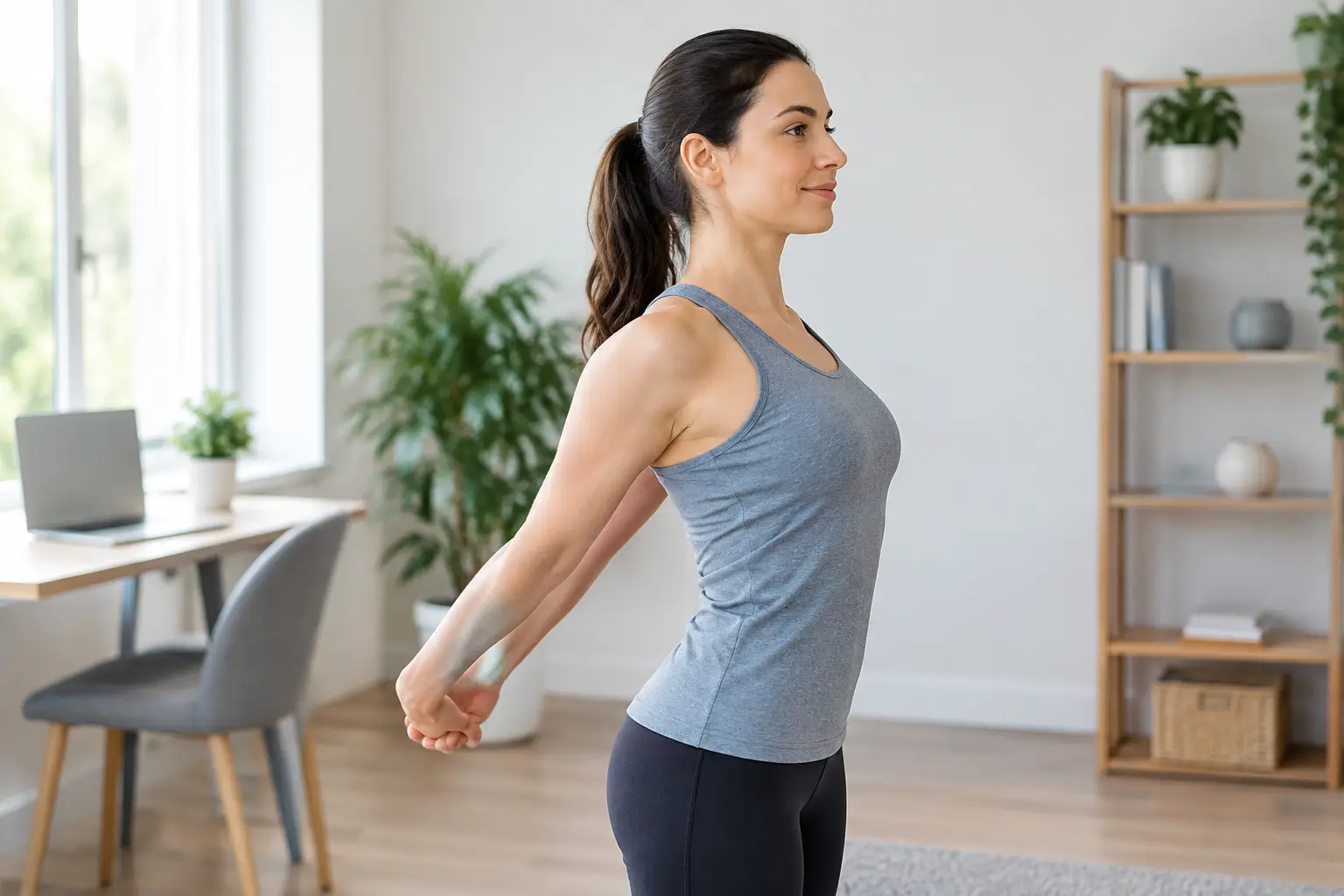
A long afternoon at a laptop can leave your neck tight, shoulders rounded, and low back aching before you have even left your chair. The best posture exercises are not about forcing yourself to stand perfectly straight all day. They are simple movements that help your body regain mobility, strength, and awareness so comfortable alignment feels more natural.
Posture is personal. Your work setup, activity level, old injuries, stress, sleep, and daily habits all influence how your body feels. A few well-chosen exercises can be a meaningful part of caring for your spine, especially when you practice them consistently and pair them with regular movement throughout the day.
What Good Posture Really Means
Healthy posture is not one rigid position you must hold from morning to night. Bodies are designed to move, shift, reach, bend, and rest. The goal is to avoid spending too much time in any one strained position, particularly one that leaves your head drifting forward, your chest collapsed, or your low back unsupported.
For many adults, posture work comes down to three helpful areas: improving mobility through the chest and upper back, strengthening the muscles that support the shoulder blades and core, and building better movement habits. If an exercise causes sharp pain, numbness, tingling, dizziness, or symptoms that travel into an arm or leg, stop and speak with a qualified health professional.
8 Best Posture Exercises to Add to Your Routine
You do not need a complicated workout or specialized equipment to begin. Move slowly, breathe normally, and choose a comfortable range of motion. Start with a few of these exercises three to five days a week, then adjust based on how your body responds.
1. Chin Tucks
Chin tucks can help counter the forward-head position that often develops during computer work, driving, and phone use. Sit or stand tall with your eyes level. Gently glide your head straight backward, as though you are making a small double chin. Keep your chin level rather than tipping it down.
Hold for three to five seconds, then relax. Aim for 8 to 10 repetitions. You may feel the muscles in the front of your neck lengthen and the deep muscles along the back of your neck begin to engage. The movement should be small and controlled, never forced.
2. Wall Angels
Wall angels encourage upper-back mobility while training the muscles around your shoulder blades. Stand with your back near a wall and step your feet slightly forward. Let your head, upper back, and hips rest comfortably against the wall if that position feels accessible.
Raise your arms into a goalpost shape, with elbows bent. Slowly slide your arms upward and downward without straining to keep every point of contact against the wall. Complete 6 to 10 slow repetitions. If your shoulders feel pinched, use a smaller range or try the movement lying on the floor instead.
3. Doorway Chest Stretch
A tight chest can pull the shoulders forward and make upright sitting or standing feel tiring. Stand in an open doorway and place one forearm against the frame, with your elbow around shoulder height. Step forward gently until you feel a comfortable stretch through the front of your chest and shoulder.
Hold for 20 to 30 seconds, then switch sides. Repeat once or twice. Keep your ribs from flaring forward and avoid pushing into pain. This stretch is especially useful after prolonged desk work, but it works best when paired with strengthening exercises rather than used alone.
4. Seated Thoracic Extension
The thoracic spine is the middle and upper part of your back. When this area becomes stiff, your neck and low back may work harder to make up for the lost movement. Sit in a sturdy chair with the chair back supporting your mid-back, not your low back.
Place your hands lightly behind your head and gently lean your upper back over the chair. Keep your low back relaxed and avoid pulling on your neck. Take a breath or two, return to neutral, and repeat 6 to 8 times. This can be a welcome reset during a workday when your upper back feels locked up.
5. Shoulder Blade Squeezes
Shoulder blade squeezes are a simple way to awaken the upper-back muscles that support the shoulders. Sit or stand with your arms relaxed by your sides. Draw your shoulder blades gently back and down, as if you are trying to place them into opposite back pockets.
Hold for five seconds and repeat 10 times. Avoid shrugging toward your ears or squeezing so hard that your chest feels strained. Think of this exercise as a quiet reminder to create space across the collarbones, not as a military-style posture correction.
6. Bird Dog
Bird dog builds coordinated strength through the core, hips, shoulders, and spine. Begin on your hands and knees with your hands under your shoulders and knees under your hips. Gently brace your abdominal muscles, then extend one leg behind you. If you feel stable, reach the opposite arm forward.
Pause briefly, return with control, and switch sides. Try 6 to 8 repetitions per side. Keep your hips as level as possible and resist the urge to arch your low back. It is better to reach a shorter distance with control than to extend farther and lose alignment.
7. Dead Bug
Dead bugs strengthen your deep core muscles while teaching your spine to remain supported during limb movement. Lie on your back with your knees bent to 90 degrees and your arms reaching toward the ceiling. Exhale gently and let your low back feel heavy against the floor without forcefully flattening it.
Slowly lower one heel toward the floor while reaching the opposite arm overhead, then return to the starting position. Alternate sides for 6 to 10 repetitions per side. If your back starts to arch or you feel discomfort, shorten the movement by lowering only the heel or only the arm.
8. Half-Kneeling Hip Flexor Stretch
Long periods of sitting can leave the front of the hips feeling tight, which may contribute to low-back discomfort for some people. Kneel on one knee with the other foot in front. Place a cushion under your back knee if needed. Gently tuck your pelvis by bringing your belt buckle slightly upward, then shift forward a small amount.
You should feel a stretch in the front of the hip on the kneeling side. Hold for 20 to 30 seconds and switch sides. Keep your torso tall and avoid leaning far forward, which can reduce the stretch and irritate the low back.
How to Make Posture Exercises Work in Real Life
Consistency matters more than intensity. A focused 10-minute routine done several times per week can be more helpful than an ambitious program you only do once. Try chin tucks, shoulder blade squeezes, and seated thoracic extensions during a brief work break. Save bird dogs, dead bugs, and hip stretches for a few minutes at home.
Your environment also matters. Set your screen closer to eye level when possible, support your feet while seated, and change positions regularly. Even the best exercise routine cannot fully offset hours of uninterrupted sitting. A short walk, a few stairs, or a gentle stretch every 30 to 60 minutes gives your body the variety it needs.
It also helps to be realistic about your goals. You may notice less stiffness or easier movement before you see any visible change in how you stand. For some people, posture discomfort is tied to muscle tension and daily habits. For others, previous injuries, joint restrictions, stress, or persistent pain need more individualized attention.
When Personalized Postural Support Can Help
If neck pain, headaches, shoulder tension, or low-back discomfort keeps returning, a professional postural assessment can help identify the movement patterns involved. At Whole Health Chiropractic, care is centered on your unique needs, with gentle spinal adjustments, mobility support, and wellness guidance designed around your goals and daily routine.
Exercises are most effective when they fit your body and your life. Start gently, stay patient with your progress, and let each small movement break become an opportunity to feel more comfortable, capable, and supported in the way you move.