

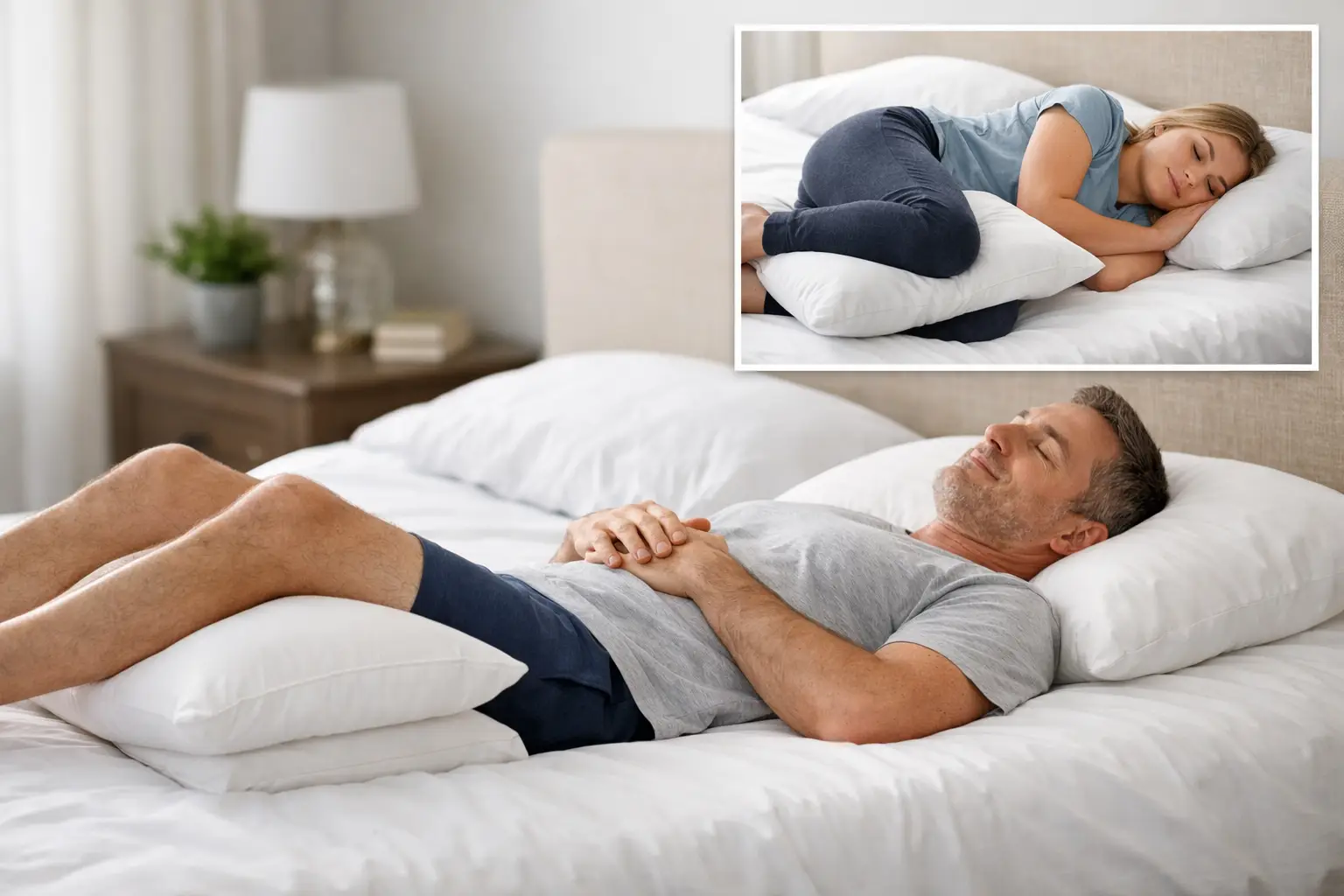
A painful back can make bedtime feel less like rest and more like problem-solving. The right sleeping positions for back pain will not fix every cause of discomfort, but they can reduce strain on sensitive joints and muscles while helping your spine stay in a more neutral, supported position. Often, a few thoughtful pillow adjustments can make a meaningful difference in how you feel when you wake up.
Back pain is personal. What feels supportive for someone with lower-back tightness may aggravate a person with hip pain, sciatica symptoms, or a sensitive neck. The goal is not to force your body into one “perfect” pose. It is to find a position that lets your muscles relax and keeps your head, ribs, pelvis, and legs working together comfortably.
Why Your Sleep Position Can Affect Back Pain
Your body spends hours in the same general position overnight. If your mattress, pillow, or sleep posture leaves your low back overly arched, your upper body twisted, or your neck angled forward, those tissues may stay under low-level stress for much of the night. That can contribute to morning stiffness, muscle guarding, and the familiar feeling that you need to stretch before you can move normally.
Support matters because the spine has natural curves. A comfortable sleep setup does not need to flatten those curves completely. Instead, it should prevent them from being exaggerated. The best approach is usually the one that allows you to breathe easily, change positions naturally, and wake with less pain rather than more.
The Best Sleeping Positions for Back Pain
Side sleeping with a pillow between your knees
For many adults, side sleeping is one of the most comfortable positions for low-back discomfort. Bend your knees slightly and place a firm but comfortable pillow between them. This helps keep the top leg from dropping forward and rotating the pelvis, which can tug on the low back and hips.
Try to keep your shoulders and hips stacked rather than rolling your upper body toward the mattress. Your head pillow should fill the space between your ear and shoulder so your neck does not tilt down or upward. If there is a gap between your waist and the mattress, a small pillow or folded towel at that area may provide added support.
This position can be especially helpful for people whose pain worsens when lying flat on their back. It may also feel more natural during pregnancy. The trade-off is that some side sleepers develop shoulder pressure or numbness. If that happens, reassess your mattress comfort and avoid tucking your lower arm under your head.
Back sleeping with support under your knees
Sleeping on your back can work very well when your lower back feels better with gentle support. Place a pillow beneath your knees to reduce the pull of your hip flexor muscles and soften the arch in your low back. A small rolled towel under the natural curve of the lower back can feel comfortable for some people, but it should be subtle. Too much lift can create more tension.
Choose a head pillow that keeps your chin level rather than pushing it toward your chest. If your pillow is too tall, it can leave your neck stiff even when your lower back feels supported. This is a good reminder that back pain and neck alignment are connected: your entire spine benefits from a balanced setup.
Back sleeping is not ideal for everyone. People who snore heavily or have obstructive sleep apnea may breathe more easily on their side. If you are unsure, speak with your medical provider about sleep-related breathing concerns.
A reclined position for certain types of discomfort
Some people find relief in a gently reclined position, such as in an adjustable bed or a supportive recliner. Elevating the upper body and slightly bending the knees can reduce pressure for people who are uncomfortable lying fully flat. This position is sometimes easier during a flare-up, after certain injuries, or when getting in and out of bed is especially painful.
The key is support, not slouching. Your neck should not be pushed forward, and your lower back should not collapse into a rounded position for hours. If a reclined setup leaves you more stiff in the morning, it may not be the right long-term solution for your body.
Stomach sleeping: usually the least supportive option
Stomach sleeping can place the neck in a rotated position for a long time and may increase the curve of the low back. For that reason, it is often the most challenging position for people dealing with back or neck pain.
Still, sleep habits are not always easy to change overnight. If you naturally fall asleep on your stomach, try placing a thin pillow under your pelvis and lower abdomen to reduce low-back strain. Use a very thin head pillow, or no head pillow if that is comfortable, to limit how far your neck turns. These changes may make stomach sleeping less stressful while you gradually explore another position.
Pillow Placement Matters More Than Most People Think
A supportive pillow setup can be one of the simplest ways to improve comfort without replacing your entire mattress. Think of pillows as tools that fill the spaces your body creates when you lie down.
For side sleeping, support the space between your knees and make sure your head pillow is high enough to keep your neck level. For back sleeping, place a pillow under your knees. If you tend to roll onto your stomach, hugging a body pillow or placing one along your front can make side sleeping feel more secure.
Your pillow should support you without forcing you into position. If you wake with tingling, new pain, or a sore shoulder, the pillow may be too thick, too firm, or placed in the wrong spot. Small adjustments are worth trying for several nights before deciding whether they help.
Your Mattress and Daily Movement Also Play a Role
Even the best sleep posture can be difficult to maintain on a mattress that sags, feels painfully hard, or no longer supports your body evenly. There is no single mattress firmness that works for everyone. Many people with back pain do well with a medium-firm feel, but your body size, preferred sleep position, and pressure sensitivity all matter.
Pay attention to patterns instead of chasing a universal recommendation. Do you feel better after sleeping in a different bed? Does your pain ease after you have been up and moving for a few minutes? Does one side of your body consistently feel tighter? These clues can help identify whether sleep support, posture, mobility, or daily habits may be contributing.
Gentle movement during the day can also make nighttime more comfortable. Frequent posture changes, walking, mobility work, and strength-building appropriate for your needs can reduce the stiffness that follows you into bed. A personalized plan is often more effective than relying on one stretch or one sleep position alone.
When Back Pain Needs More Attention
Occasional stiffness after a long day may improve with better sleep support and regular movement. Persistent or worsening pain deserves a closer look, particularly if it limits your work, exercise, or ability to enjoy time with family.
Seek prompt medical care for back pain accompanied by new bowel or bladder changes, numbness in the groin area, severe or progressive leg weakness, fever, unexplained weight loss, or pain after a significant fall or accident. These symptoms can require urgent evaluation.
For ongoing mechanical back pain, an individualized assessment can help you understand the factors behind your discomfort. At Whole Health Chiropractic, gentle spinal adjustments, postural analysis, and supportive therapies such as cupping may be incorporated into care based on your unique needs, mobility, and wellness goals. The focus is not simply on getting through one painful night. It is on helping you move with greater comfort and confidence over time.
Tonight, choose one small change that feels realistic: a pillow between your knees, support under your legs, or a more neutral head pillow. Give your body a few nights to respond, stay curious about what it tells you, and remember that restful sleep is part of your journey toward feeling your best.