

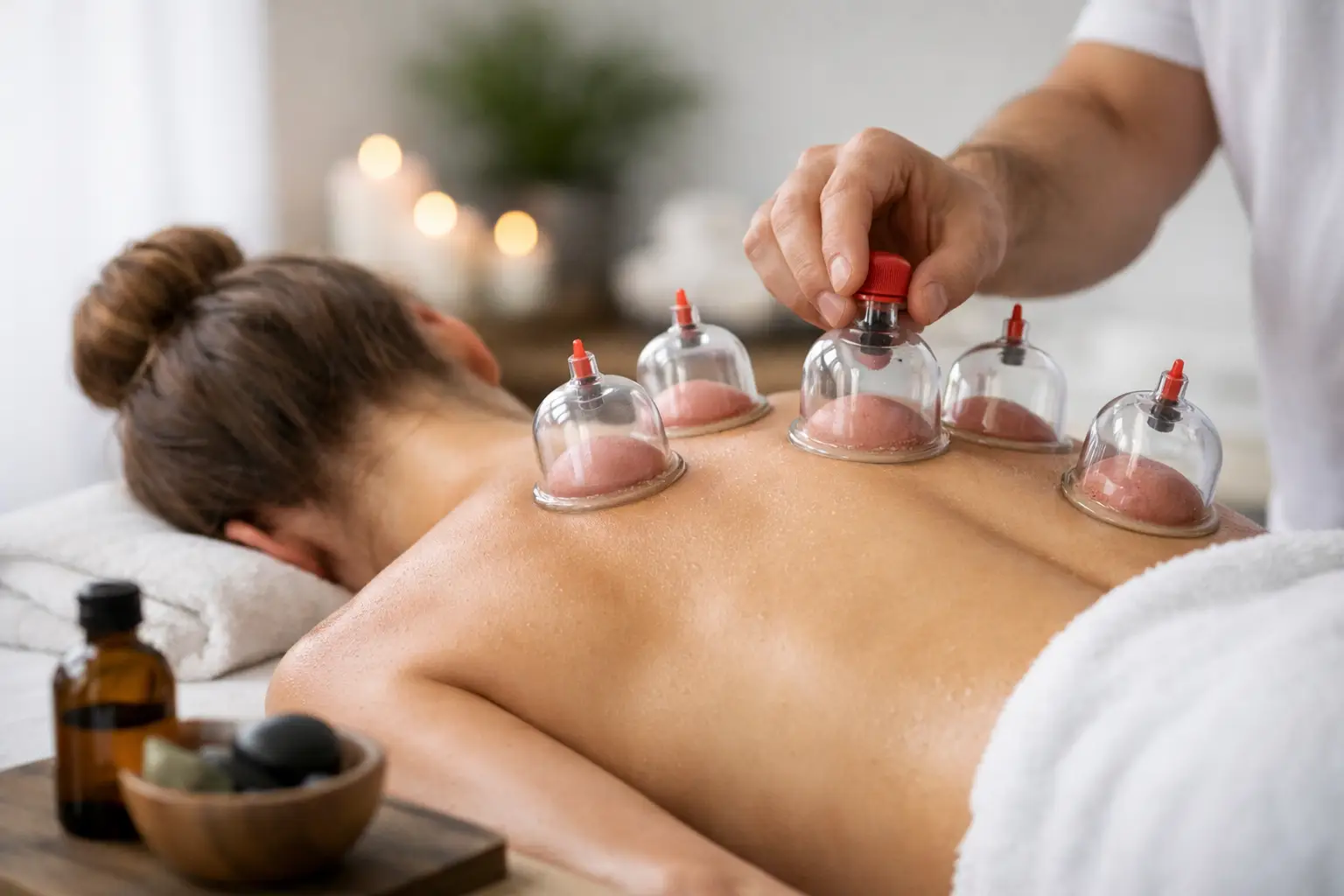
A tight upper back after a workday, calves that never seem to loosen after a run, or shoulders that stay elevated even when you are trying to rest can make everyday movement feel harder than it should. Cupping therapy for muscle tension offers a gentle, non-invasive option that may help your body relax, move more freely, and feel better supported as part of a personalized chiropractic care plan.
What Is Cupping Therapy?
Cupping therapy uses smooth cups placed on the skin to create gentle suction. Rather than pressing down into a sore area as massage does, the cups lightly lift the skin and underlying soft tissue. This creates a distinctive pulling or stretching sensation that many patients find surprisingly soothing.
At Whole Health Chiropractic, cupping may be used alongside gentle spinal adjustments, postural analysis, and movement guidance when it fits your needs. The goal is not to apply the same treatment to every patient. It is to understand where your body is holding tension, what may be contributing to it, and which supportive therapies can help you move toward greater comfort and mobility.
Cups may stay in one place for several minutes, or your provider may gently glide them over an area with a small amount of lotion. The approach depends on the location of tension, your comfort level, your health history, and the goals of your visit.
How Cupping Therapy for Muscle Tension May Help
Muscle tension is not always caused by one intense workout or a single awkward movement. It can build gradually through long hours at a computer, repetitive lifting, stress, poor sleep, limited movement, or compensating for pain elsewhere in the body. When muscles stay guarded, they may feel stiff, tender, heavy, or less responsive during normal movement.
The suction created during cupping may help promote circulation in the treated area and encourage a sense of release in tight soft tissues. Some patients notice that an area feels warmer, lighter, or easier to move shortly after treatment. Others experience more gradual changes over several visits, particularly when their tension has been present for a long time.
Cupping is not a cure-all, and results vary. It does not erase the effects of an unsupportive workstation, repeated overtraining, or a movement pattern that continues to irritate the same area. Still, it can be a valuable part of care when paired with thoughtful assessment and practical changes that support your daily routine.
Areas Where Patients Commonly Feel Tightness
Cupping can be considered for several common areas of muscle tension. The upper back, neck, and shoulders are frequent concerns for people who spend hours looking at screens, driving, or carrying stress through the day. The low back and hips may feel restricted after prolonged sitting, lifting, or changes in activity.
Active adults may also seek support for tight calves, hamstrings, quadriceps, glutes, or forearms. Parents often notice tension through the upper body from carrying children, bending, and interrupted sleep. The same symptom can have very different causes from person to person, which is why a careful conversation and examination matter.
Your provider may look beyond the spot that hurts. For example, shoulder tightness can be influenced by forward-head posture, limited upper-back mobility, or how you use your arms throughout the day. Hip discomfort may be connected to sitting habits, gait changes, or lower-back stiffness. A whole-person approach helps guide care toward the patterns behind your discomfort, not only the place where you feel it most.
What to Expect During a Cupping Session
Your visit should begin with listening. Before recommending cupping, your chiropractor can discuss your symptoms, current activity level, medical history, goals, and any concerns you have about treatment. You can ask questions at any point and share what feels comfortable for you.
During treatment, the cups are placed over selected muscle groups. You may feel a firm pulling sensation, pressure, or mild warmth, but treatment should not feel sharp or intolerable. Let your provider know if anything feels too intense. Cupping can be adjusted by changing the amount of suction, the placement of the cups, or the length of time they remain on the skin.
A session may last only a few minutes in one area or be incorporated into a broader chiropractic appointment. Some patients benefit from cupping before an adjustment because relaxed soft tissue can make movement feel easier. Others may receive it after an adjustment or alongside recommendations for gentle mobility work, hydration, posture changes, or recovery habits.
Following treatment, you may feel relaxed, mildly sore, or more aware of the treated area. It is generally wise to choose easy movement, such as walking or gentle stretching, rather than immediately returning to a very demanding workout. Your provider can give guidance based on your specific activity level and response to care.
Why Temporary Marks Can Happen
One of the most common questions about cupping involves the circular marks it can leave behind. These marks are a response to the suction and can range from light pink to deeper red or purple. They are not typically painful bruises from impact, and they do not mean toxins are being pulled from the body.
The color and duration of the marks vary based on your skin, the amount of suction used, and how reactive the area is. They may fade within a few days or take longer to disappear. If you have an event, photos, or a beach day coming up, mention that before your session so your provider can discuss placement and timing.
When Cupping May Not Be the Right Choice
A personalized plan also means knowing when to use a different approach. Cupping may not be appropriate over irritated, broken, sunburned, infected, or rash-covered skin. Your provider should also know if you are pregnant, take blood-thinning medication, have a bleeding disorder, have a history of blood clots, or have a condition that affects skin integrity or sensation.
If you have severe pain, unexplained swelling, numbness, weakness, fever, a recent significant injury, or symptoms that are worsening quickly, do not assume muscle tension is the cause. These concerns deserve a timely medical evaluation. Conservative care works best when it is informed by the right diagnosis and coordinated with your overall health needs.
Making Relief Last Beyond the Appointment
Cupping can help create an opportunity for more comfortable movement, but daily habits often determine whether that progress holds. Small changes can make a meaningful difference: adjusting the height of your screen, taking brief movement breaks, varying your position while working, building recovery time into training, and using exercises that support posture and mobility.
Your chiropractor can help you identify which changes are most relevant for you. A busy professional may need a realistic desk routine rather than an hour-long exercise plan. A runner may need guidance on recovery and hip mobility. A parent may benefit from strategies for lifting and carrying with less strain. Care is more sustainable when it fits the life you actually live.
You do not have to accept constant tightness as the price of work, exercise, or caring for others. A thoughtful consultation can help you understand what your body is asking for and choose a gentle path toward feeling more comfortable, capable, and ready to do what matters to you.

Pingback: Chiropractic Treatment for Neck Stiffness - WHOLE HEALTH CHIROPRACTIC
Pingback: Can a Chiropractor for Sciatica Pain Help? - WHOLE HEALTH CHIROPRACTIC
Pingback: When Should You See a Chiropractor for Pain? - WHOLE HEALTH CHIROPRACTIC
Pingback: Cupping Therapy Versus Massage Therapy: Which Helps? - WHOLE HEALTH CHIROPRACTIC
Pingback: Chiropractic for Seniors: Gentle Care, Better Movement - WHOLE HEALTH CHIROPRACTIC