

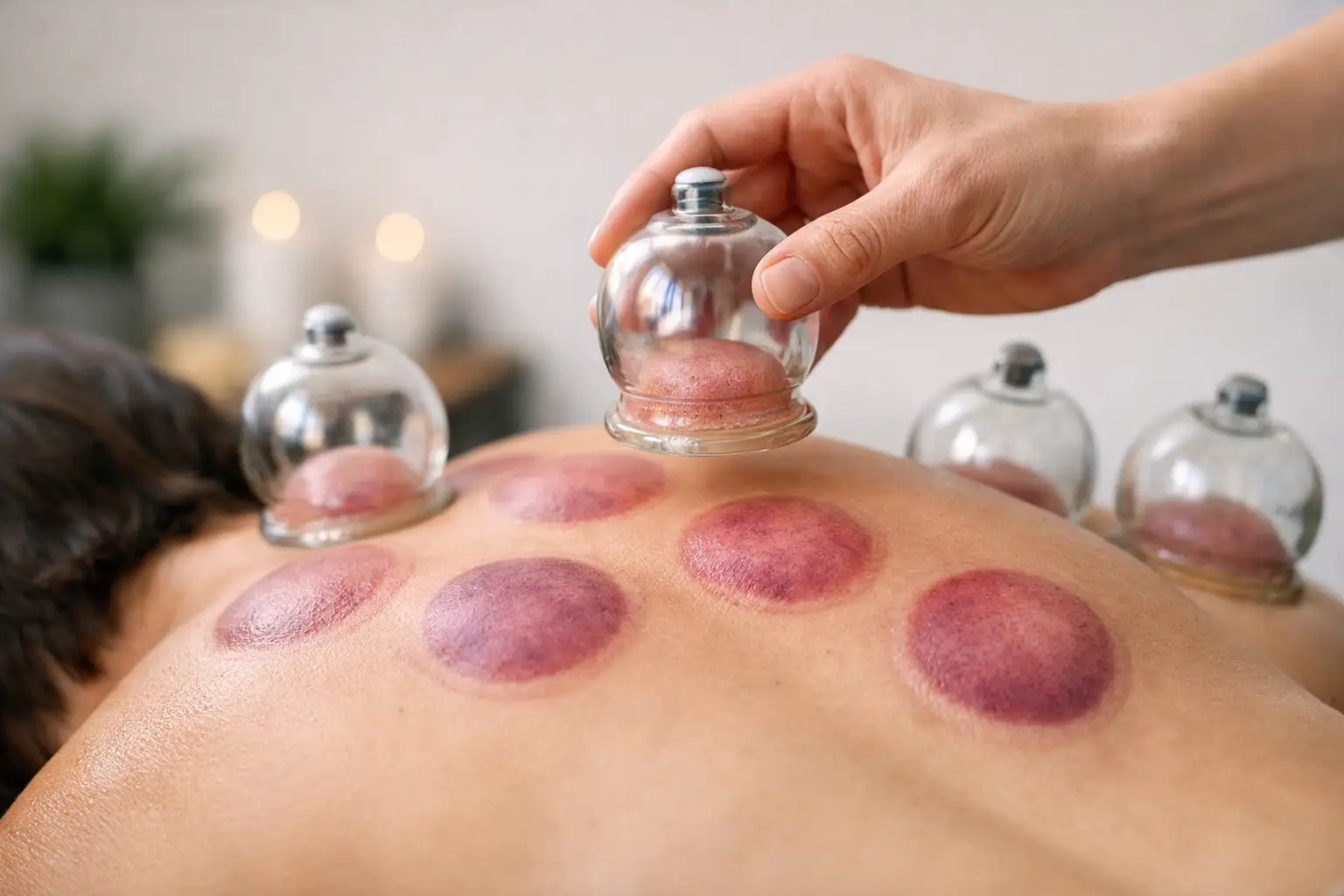
If you are considering cupping therapy, it is natural to wonder: can cupping leave bruises? The short answer is yes, cupping can leave round, red-to-purple marks that look similar to bruises. But in many cases, these marks are not the same as a typical bruise caused by a bump or injury. They are a temporary skin response to the gentle suction used during treatment.
For many people, cupping is a comfortable, non-invasive way to address muscle tightness, restricted movement, and the lingering soreness that can come from work, exercise, posture, or everyday life. Knowing what the marks mean can help you feel more prepared and at ease before your session.
Can Cupping Leave Bruises or Marks?
Cupping uses specially designed cups to create suction on the skin. That suction gently lifts the skin and underlying soft tissue rather than pressing down on it, as massage often does. This may increase local circulation and create a stretching sensation in tight areas.
Afterward, you may notice circular marks where the cups were placed. These can range from light pink to deep red, purple, or brown depending on your skin tone, the amount of suction used, the condition of the tissue, and your individual circulation. Some people have only faint marks. Others may develop more noticeable discoloration, especially over areas that were very tight or sensitive.
Although people commonly call them bruises, cupping marks do not always involve the same type of tissue injury as a conventional bruise. A traditional bruise typically occurs when an impact damages small blood vessels beneath the skin. With cupping, the suction can bring blood closer to the skin’s surface and may cause tiny capillaries to respond. The result can look similar, but it is generally expected to resolve on its own.
Why Cupping Marks Vary From Person to Person
There is no single “normal” color or intensity of cupping mark. Your body’s response is personal, which is one reason a thoughtful provider adjusts care to your needs instead of using the same approach for every patient.
A few factors can influence what you see after treatment. Stronger suction and a longer cup placement may leave more visible marks. Areas with muscle tension, reduced mobility, or tenderness may also react more noticeably. Hydration, skin sensitivity, age, medications, and natural differences in circulation can all play a role.
Your provider may use stationary cups, leaving them in place for a brief period, or moving cups, which glide over the skin with a lotion or oil. Moving cupping often creates more diffuse redness rather than distinct circles. Gentle techniques may leave little to no visible discoloration at all.
The goal is never to create the darkest possible mark. More color does not automatically mean a more effective treatment. A comfortable, personalized approach should account for your health history, your goals, and how your body responds during the appointment.
How Long Do Cupping Marks Last?
Most cupping marks fade within several days to about two weeks. Lighter marks may disappear in a day or two, while darker marks can take longer. As they fade, the color may shift, much like a typical bruise does.
You might feel mild tenderness in the treated area for a day or so, particularly if the muscles were already sore. Many patients instead describe a feeling of looseness, warmth, or improved ease of movement after their session. Responses vary, and it can take time to understand what treatment schedule and technique feel best for your body.
To support your comfort afterward, drink water, choose light movement if it feels good, and give the treated area a break from intense pressure. A warm shower is often fine, but ask your provider about any specific aftercare recommendations based on the type of cupping you received and the areas treated.
When Marks Are Not a Reason to Worry
A typical cupping mark is flat, discolored, and gradually improving. It should not become severely painful, hot, swollen, blistered, or increasingly irritated. It is also common for marks to be more visible than the amount of discomfort you feel.
If you have an event, photos, swimming, or clothing that leaves part of your back, shoulders, or legs exposed, mention it before treatment. Your provider can discuss lighter suction, cup placement options, or whether it makes sense to wait until after your event. Cupping is not an all-or-nothing therapy. It can be adapted to fit your comfort level and schedule.
When to Contact Your Provider
Cupping is generally well tolerated when performed appropriately, but any therapy should be approached with care. Contact your provider if a treated area becomes unusually painful, develops blisters, shows signs of infection such as spreading redness or drainage, or does not seem to be improving over time.
It is also wise to discuss cupping before your session if you take blood-thinning medication, have a bleeding or clotting condition, have fragile skin, are prone to significant bruising, or have a history of skin reactions. Cupping may not be appropriate over open wounds, active skin infections, sunburn, certain rashes, or areas with impaired sensation. Pregnancy, recent surgery, and certain medical conditions may call for modified care or a different approach.
A complete health conversation matters. Your practitioner should ask about medications, health changes, and any concerns you have so treatment can be delivered gently and responsibly.
What a Personalized Cupping Session Should Feel Like
Cupping should not feel like something you have to endure to get relief. During a session, you may notice a pulling or tight sensation under the cups. It can be strong enough to feel therapeutic, but it should remain manageable. If you feel pinching, sharp pain, numbness, burning, or anxiety, speak up right away.
At Whole Health Chiropractic, care begins with listening. Cupping may be used as one part of an individualized plan that can also include gentle spinal adjustments, mobility support, and postural analysis. For example, someone with desk-related upper back tension may benefit from a different strategy than an active parent dealing with hip tightness or a runner with limited ankle mobility.
That whole-person perspective helps keep the focus where it belongs: not on chasing a particular mark, but on helping you move more comfortably, reduce tension, and feel more confident in your daily routine.
Can You Prevent Cupping Marks?
You cannot always prevent marks completely, especially if your skin and soft tissue respond strongly to suction. You can, however, reduce the chance of noticeable discoloration by communicating clearly before treatment. Let your provider know if you are new to cupping, nervous about marks, taking medications, or have an upcoming occasion where visible marks would be inconvenient.
Your provider may choose lower suction, shorter application times, or moving cupping instead of leaving cups stationary. They can also avoid particularly sensitive areas. These adjustments may still support relaxation and mobility while making the treatment experience feel more comfortable for you.
Avoid trying to aggressively rub, scrape, or “work out” the marks afterward. They need time to fade naturally. If you have questions about an individual mark or reaction, a quick conversation with your provider is more useful than guessing based on appearance alone.
A Comfortable Path Toward Better Movement
Visible cupping marks can be surprising the first time you see them, but they are often a short-lived part of a carefully delivered treatment. Your comfort, health history, and goals should guide every decision, from how much suction is used to whether cupping is the right option at all.
If muscle tension, stiffness, or limited movement is getting in the way of feeling your best, consider scheduling a consultation to talk through your options. The right care plan should help you move forward with clarity, support, and a treatment experience that respects your body’s unique needs.

Pingback: A Practical Guide to Cupping Aftercare at Home - WHOLE HEALTH CHIROPRACTIC