
A stiff hip can make ordinary moments feel surprisingly demanding. Getting out of the car, climbing stairs, sitting through a workday, or returning to a favorite workout may all come with a pinch, pull, or deep ache. The best stretches for hip pain are not necessarily the deepest or most intense ones. They are the movements you can perform gently, consistently, and without forcing your body past its limits.
Hip discomfort can come from many places. Tight muscles around the hip, prolonged sitting, poor movement habits, low-back tension, overtraining, and postural imbalance can all play a role. A thoughtful stretching routine may help ease muscle tension and restore comfortable motion, but it works best when it is part of a broader plan that considers how your whole body moves.
Before You Stretch a Painful Hip
Start slowly. Stretching should create a mild sensation of tension, not sharp pain, burning, numbness, or a feeling that the joint is catching. Breathe steadily and avoid bouncing. For most people, holding a stretch for 20 to 30 seconds and repeating it two or three times is a comfortable place to begin.
It also helps to warm up first. A few minutes of easy walking around your home, marching in place, or gentle leg movement can make stretching feel more comfortable. If you have had a recent injury, surgery, severe arthritis, osteoporosis, or a diagnosed hip condition, ask a qualified health professional which movements are appropriate for you.
Stop and seek prompt medical attention for hip pain following a fall or accident, an inability to bear weight, visible swelling or deformity, fever, sudden severe pain, or numbness and weakness in the leg. Those symptoms need more than a home stretching routine.
8 Best Stretches for Hip Pain
The following stretches focus on muscles that commonly contribute to hip tightness, including the hip flexors, glutes, inner thighs, and muscles around the low back. Choose the options that feel good for your body. You do not need to do every stretch every day.
1. Half-Kneeling Hip Flexor Stretch
Long periods of sitting can leave the hip flexors feeling short and tight. These muscles sit at the front of the hip and help lift your leg as you walk, climb, and move.
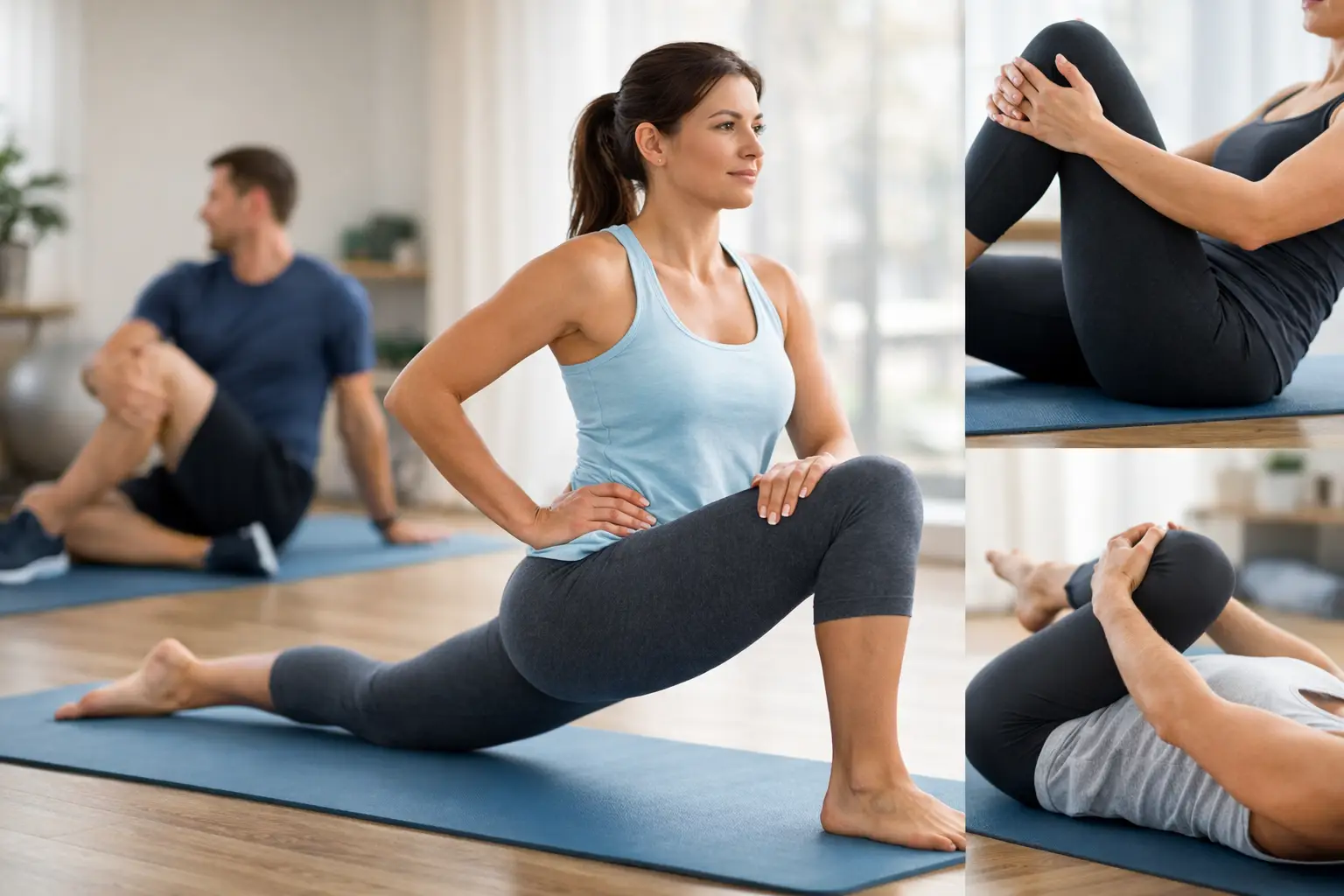
Kneel on a padded surface with one knee down and the opposite foot in front of you. Keep your chest tall and gently tuck your pelvis as though you are bringing your belt buckle slightly upward. Shift forward only a small amount until you feel a stretch at the front of the hip on the kneeling side. Avoid arching your low back to create more range. Switch sides after 20 to 30 seconds.
2. Figure-Four Glute Stretch
The figure-four stretch can ease tension through the glutes and outer hip, especially for people who notice stiffness after sitting or driving.
Lie on your back with both knees bent and feet on the floor. Rest one ankle across the opposite thigh, just above the knee. If that position provides enough sensation, stay there. To deepen it gently, hold behind the thigh of the supporting leg and draw it toward your chest. Keep your head and shoulders relaxed. If your knee feels strained, reduce the range or choose another stretch.
3. Seated Figure-Four Stretch
For a more accessible version of the glute stretch, sit near the front edge of a sturdy chair. Place one ankle over the opposite thigh and keep the flexed foot active. With a long spine, lean forward slightly from your hips until you feel a comfortable stretch in the outer hip.
This is a useful option during the workday because it does not require getting onto the floor. Small movement breaks can be more helpful than waiting until stiffness becomes intense at the end of the day.
4. Butterfly Stretch
The butterfly stretch targets the inner thighs and can support comfortable hip opening when performed without forcing the knees downward.
Sit on the floor with the soles of your feet together and your knees falling outward. Sit on a folded blanket or firm cushion if your low back rounds significantly. Hold your feet or ankles and allow the knees to relax toward the floor naturally. You may hinge forward slightly if it feels comfortable, but the goal is ease, not depth.
5. Child’s Pose With Side Reach
Hip tension and low-back tension often occur together. This gentle variation of child’s pose can create space along the side of the body, low back, and outer hip.
Begin on your hands and knees, then sit your hips back toward your heels as far as comfortable. Your knees can be wide or closer together based on what feels best. Walk both hands to the right and breathe into the left side of your body for several slow breaths. Return to center, then repeat on the other side. Place a pillow under your chest or between your hips and heels if the position feels too intense.
6. Reclined Knee-to-Chest Stretch
When your hips feel guarded, a simple knee-to-chest position may be more comfortable than a deeper stretch. Lie on your back, bend both knees, and bring one knee toward your chest. Hold behind the thigh or over the shin, whichever feels comfortable.
Keep the other foot on the floor or extend that leg if it does not pull on your back. Hold for 20 to 30 seconds, then switch sides. You can also hug both knees toward your chest if that feels soothing, but skip it if it increases low-back pain.
7. Gentle Hip Rotation
Hip rotation is part of everyday movement, from turning while walking to getting in and out of a car. A controlled rotational stretch can help you explore that motion without pushing the joint.
Sit in a chair with your feet flat and knees bent. Keeping one foot on the floor, slowly let that knee move outward a few inches, then return to center. The movement should come from the hip, not from twisting your whole body. Repeat eight to 10 times on each side. This is less about holding a long stretch and more about restoring calm, comfortable motion.
8. Standing Quad Stretch With Support
Tight quadriceps can affect how the front of the hip feels, particularly after walking, running, cycling, or standing for long periods. Stand beside a wall, counter, or chair for balance. Bend one knee and bring your heel toward your seat, holding your ankle or pant leg if you can do so comfortably.
Keep your knees close together and gently tuck your pelvis instead of leaning backward. If reaching your foot is difficult, loop a towel around the ankle or skip this movement. Balance should never be the challenge in a hip stretch.
How Often Should You Stretch for Hip Pain?
Consistency matters more than doing a long session once in a while. Many people feel best with five to 10 minutes of gentle mobility work most days, especially after periods of sitting or before and after activity. If a stretch leaves you sore for more than a day, back off the intensity, shorten the hold, or reduce how often you perform it.
Stretching alone may not address the reason your hips keep tightening. Weak or underactive glute muscles, limited core control, repetitive work positions, uneven movement patterns, and spinal or pelvic alignment concerns can all influence how the hips feel. That is why a personalized approach is often more effective than copying a routine that worked for someone else.
When Hip Pain Needs More Personalized Support
If your hip pain is persistent, keeps returning, interferes with sleep, or limits the activities you enjoy, it may be time to look beyond stretching. A careful assessment can help identify whether posture, low-back mechanics, muscle imbalance, movement habits, or another factor may be contributing to your discomfort.
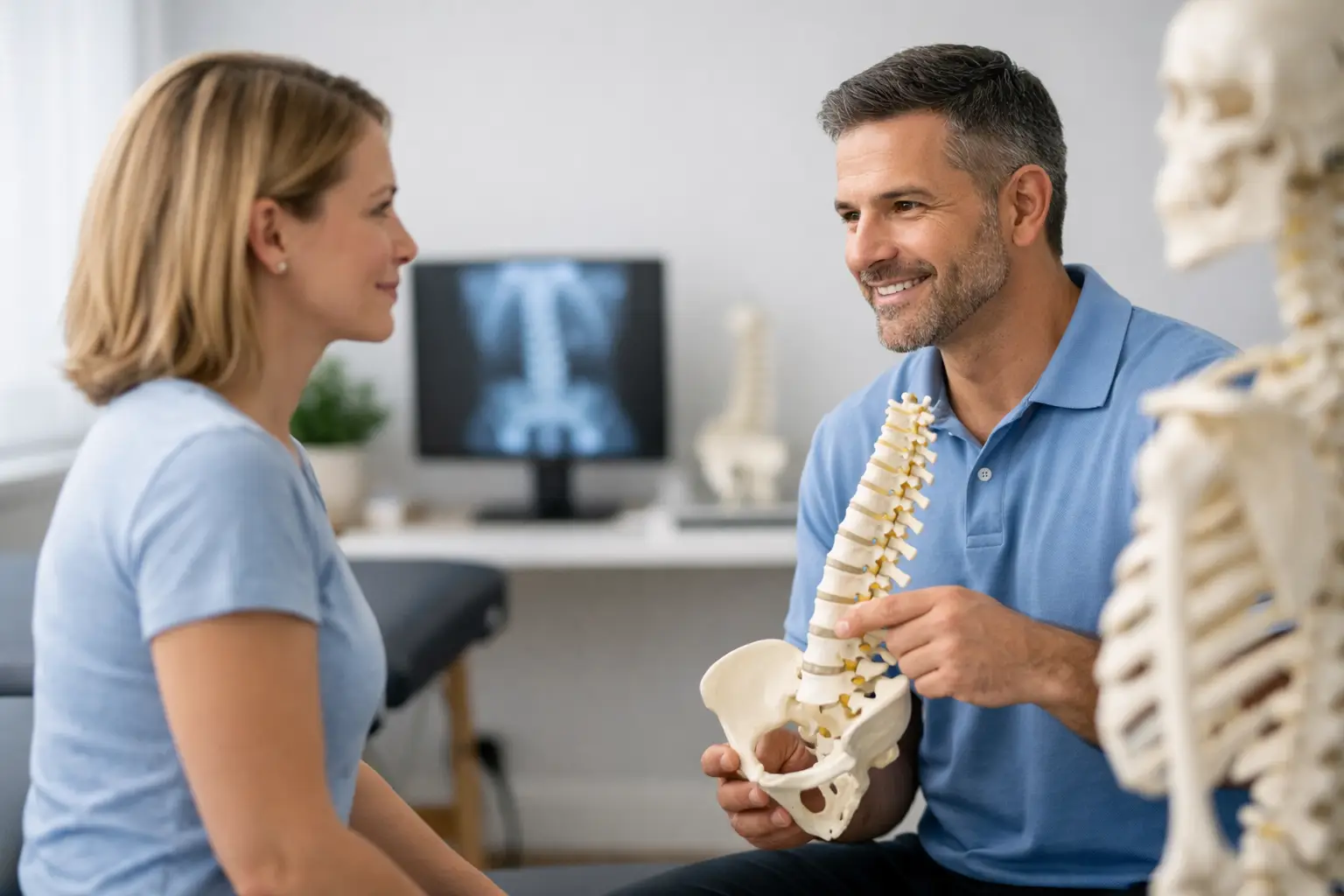
At Whole Health Chiropractic, care is centered on your individual needs and goals. Gentle spinal adjustments, postural analysis, mobility guidance, and supportive therapies such as cupping can be used thoughtfully to help reduce tension, improve movement, and support your journey toward optimal health. Your plan should feel collaborative, comfortable, and built around the life you want to return to.
Your hips carry you through work, family time, exercise, and the small routines that make up each day. Treat them with patience. A few calm minutes of movement, combined with the right support when you need it, can help you move with greater comfort and feel more like yourself again.