

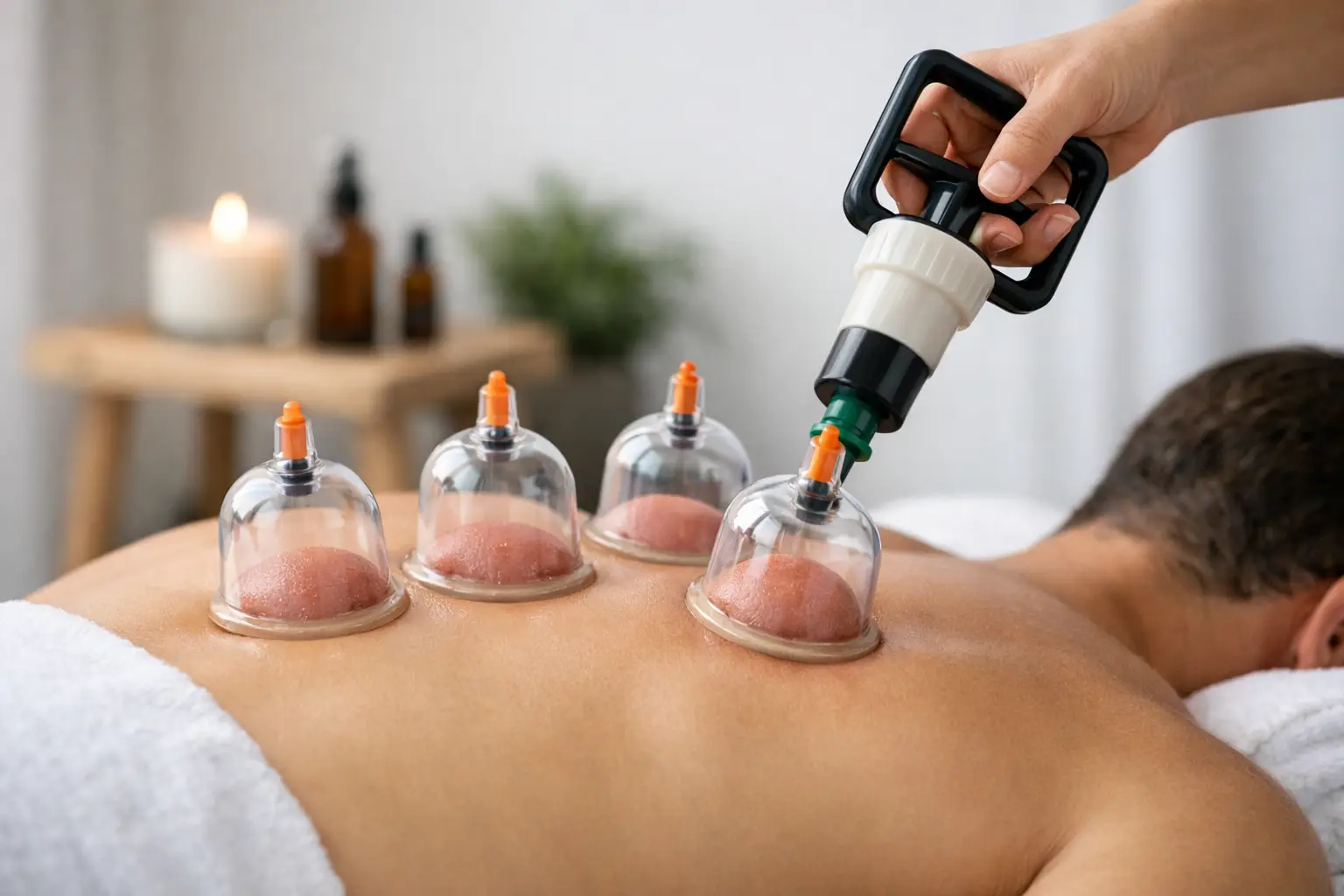
A cupping session can leave behind noticeable circular marks, which is often the part that surprises first-time patients. Learning how to use cupping safely means looking beyond those marks: the right technique, appropriate pressure, clean equipment, and a thoughtful understanding of your health history all matter. When cupping is tailored to your needs, it can be a gentle addition to a care plan for muscle tightness, restricted movement, and everyday discomfort.
What Cupping Therapy Does
Cupping therapy uses specially designed cups to create suction on the skin. Rather than pressing down into a tight area like massage, the suction gently lifts the skin and underlying soft tissue. This may help encourage circulation in the area, reduce the feeling of muscle tension, and support freer movement.
At Whole Health Chiropractic, cupping may be used alongside gentle spinal adjustments, mobility support, and postural analysis. The goal is not to chase a temporary sensation of relief. It is to understand what may be contributing to your discomfort, whether that is a demanding work posture, repetitive movement, exercise strain, or a pattern of restricted mobility.
Cupping is commonly used on larger muscular areas such as the upper back, shoulders, hips, thighs, and calves. A trained provider may use stationary cups for a short period or glide cups across the skin with a small amount of lotion. The best approach depends on the area being treated, your sensitivity, and your goals for care.
How to Use Cupping Safely: Start With the Right Assessment
Safe cupping begins before a cup touches your skin. A qualified practitioner should ask about your symptoms, health history, medications, activity level, and skin condition. They should also explain what they are doing and give you room to share concerns about comfort or pressure.
This conversation matters because cupping is not right for every person or every situation. If you have a new or unexplained pain, severe swelling, numbness, weakness, fever, or pain after a significant injury, you need appropriate medical evaluation rather than self-treating the area. Cupping can support musculoskeletal care, but it should not be used to mask symptoms that need prompt attention.
A personalized assessment also helps determine whether cupping fits your care that day. For example, a person with tight upper-back muscles from desk work may respond well to gentle cups combined with postural guidance. Someone with a fresh muscle strain after intense activity may need a different level of pressure, a shorter session, or rest and evaluation first.
Choose a Trained Provider and Clean Equipment
Professional training is one of the clearest ways to reduce unnecessary risk. Your provider should understand anatomy, skin response, appropriate cup placement, and when to modify or avoid treatment. They should never make promises that cupping can cure every health concern.
Cleanliness is equally essential. Cups should be thoroughly cleaned and disinfected between patients, and the skin should be clean before treatment begins. In a clinical setting, dry cupping with plastic, silicone, or glass cups is commonly used. This approach does not involve breaking the skin.
Avoid any form of cupping that involves puncturing or cutting the skin unless it is performed by a properly licensed medical professional in a setting that follows strict infection-control standards. For most people seeking relief from muscle tension and stiffness, noninvasive dry cupping is the more appropriate option.
Use Comfortable Pressure, Not Maximum Pressure
More suction is not better. Stronger pressure can create more intense marks and tenderness without necessarily delivering better results. Safe treatment uses only the amount of suction needed for your body and the area being addressed.
During your session, the sensation should feel like a firm pulling or stretching of the tissue, not sharp pain, burning, pinching, or panic-inducing discomfort. Speak up right away if the pressure feels too strong. A caring provider can reduce the suction, move the cup, shorten the treatment, or choose another technique.
Cups are usually left in place for several minutes, though treatment time varies. Your first session may be shorter so your practitioner can see how your skin and muscles respond. This measured approach is especially helpful if you are new to cupping, have sensitive skin, or have not had bodywork recently.
Know Where Cupping Should Not Be Used
Cups should not be placed over open wounds, sunburn, active rashes, skin infections, inflamed veins, or areas with impaired sensation. They should also be avoided directly over broken bones, suspected fractures, and certain sensitive areas of the body.
You should tell your provider if you are pregnant, take blood-thinning medication, have a bleeding disorder, have diabetes with reduced sensation or circulation concerns, or have a history of blood clots. You may still be a candidate for certain forms of care, but your treatment plan needs thoughtful adjustments. In some cases, cupping may not be recommended.
If you have cancer, a significant cardiovascular condition, uncontrolled high blood pressure, or another complex medical concern, ask the clinician managing that condition whether cupping is appropriate. Personalized care means recognizing when another provider’s guidance should come first.
What Cupping Marks Mean and When to Check In
Circular red, purple, or brownish marks can appear after cupping. They are a common response to suction and can look more dramatic than they feel. These marks are not a measure of treatment quality, and they are not toxins leaving the body. They typically fade over several days to about two weeks, depending on your skin, circulation, and the amount of suction used.
Mild tenderness in the treated muscles can also occur, much like you might feel after a deep massage or an unfamiliar workout. Give the area time to recover. Stay hydrated, keep up with comfortable movement, and avoid adding intense pressure directly over tender marks.
Contact your provider if you develop blistering, increasing pain, significant swelling, warmth, drainage, or signs of infection. Seek urgent medical care for symptoms such as trouble breathing, chest pain, sudden weakness, or severe allergic symptoms. Those concerns are not expected effects of a routine dry cupping session.
Support Your Results Between Visits
Cupping can feel most helpful when it is part of a broader plan for healthier movement. If shoulder tension keeps returning, for example, the answer may include changes to your workstation, simple mobility exercises, better lifting mechanics, or an assessment of posture and spinal movement. The same is true for hip or low-back tightness that flares after long drives, parenting tasks, or exercise.
After a session, choose gentle activity that feels good to your body. A relaxed walk, light mobility work, and adequate water can be reasonable choices. You may want to delay a demanding workout if the treated area feels especially tender. Listen to your body rather than trying to push through discomfort.
At-home cups are widely available, but they are not a substitute for an assessment from a trained professional. If you decide to use them, start with very light suction, keep sessions brief, use clean equipment, and avoid treating areas you cannot safely reach or see. Never use home cupping on irritated or injured skin, and stop if you feel pain, numbness, dizziness, or unusual skin changes.
A Gentle Approach Can Make a Meaningful Difference
The safest cupping experience is one where you feel heard, informed, and comfortable speaking up. Your care should reflect your health history, your tolerance, and the activities you want to return to with greater ease. When cupping is used thoughtfully alongside hands-on chiropractic care and practical movement guidance, it can be one supportive step on your journey toward feeling your best.

Pingback: Is Cupping Painful? A Gentle Guide to Treatment - WHOLE HEALTH CHIROPRACTIC