
Your body may be giving you useful feedback long before pain becomes hard to ignore. The tight shoulders after a laptop-heavy afternoon, the low-back ache after unloading groceries, or the stiff neck after a long drive can all reflect how you are moving through everyday life. This guide to body mechanics offers practical ways to reduce unnecessary strain while supporting the posture, mobility, and comfort you need to feel your best.
Body mechanics are not about holding yourself perfectly still or forcing a rigid posture. They are the habits that help you use your muscles, joints, and spine efficiently as you sit, stand, reach, lift, carry, and rest. Small adjustments in these habits can add up, especially when your work, family responsibilities, workouts, or daily commute demand a lot from your body.
What Good Body Mechanics Really Mean
Good body mechanics help distribute physical demands across the body instead of repeatedly loading one area, such as the neck or lower back. A helpful starting point is to keep your movements balanced: let your hips and legs assist during lifting, keep objects close to your center, and avoid twisting through your spine while carrying weight.
This does not mean there is one perfect position for every person. Your height, strength, mobility, injury history, workspace, and daily activities all matter. Someone who works at a desk has different movement demands than a parent lifting a toddler, a nurse assisting patients, or an active adult training for a race. The goal is not perfection. It is finding movement strategies that fit your body and reduce repeated irritation.
Your body also benefits from variety. Even a well-organized workstation can become uncomfortable if you remain in the same position for hours. Changing positions, taking brief movement breaks, and building strength and mobility gradually are often just as valuable as improving your seated posture.
A Guide to Body Mechanics for Everyday Movement
Lifting: Use Your Legs and Plan the Move
Before you lift anything, pause long enough to assess it. Is the item heavier or more awkward than expected? Is your path clear? Can you divide the load, use a cart, or ask for help? Planning is part of safe movement, not a sign of weakness.
Move close to the object and position your feet about hip-width apart, with one foot slightly ahead if that feels stable. Bend through your hips and knees while keeping your spine in a comfortable, neutral position. Tighten your abdominal muscles gently, hold the item close to your body, and use your legs to rise.
Avoid twisting while you lift or carry. Instead, turn with your feet and hips together. When you need to put the item down, use the same controlled approach rather than bending quickly from the waist. This matters whether you are lifting a laundry basket, a case of water, a child, or a box at work.
There are times when traditional lifting advice needs to be adjusted. If knee pain makes a deep bend uncomfortable, for example, a higher starting surface or an assistive tool may be more appropriate. If a load feels unpredictable, oversized, or beyond your ability, get help rather than trying to push through discomfort.
Sitting: Support Your Workday Without Freezing in Place
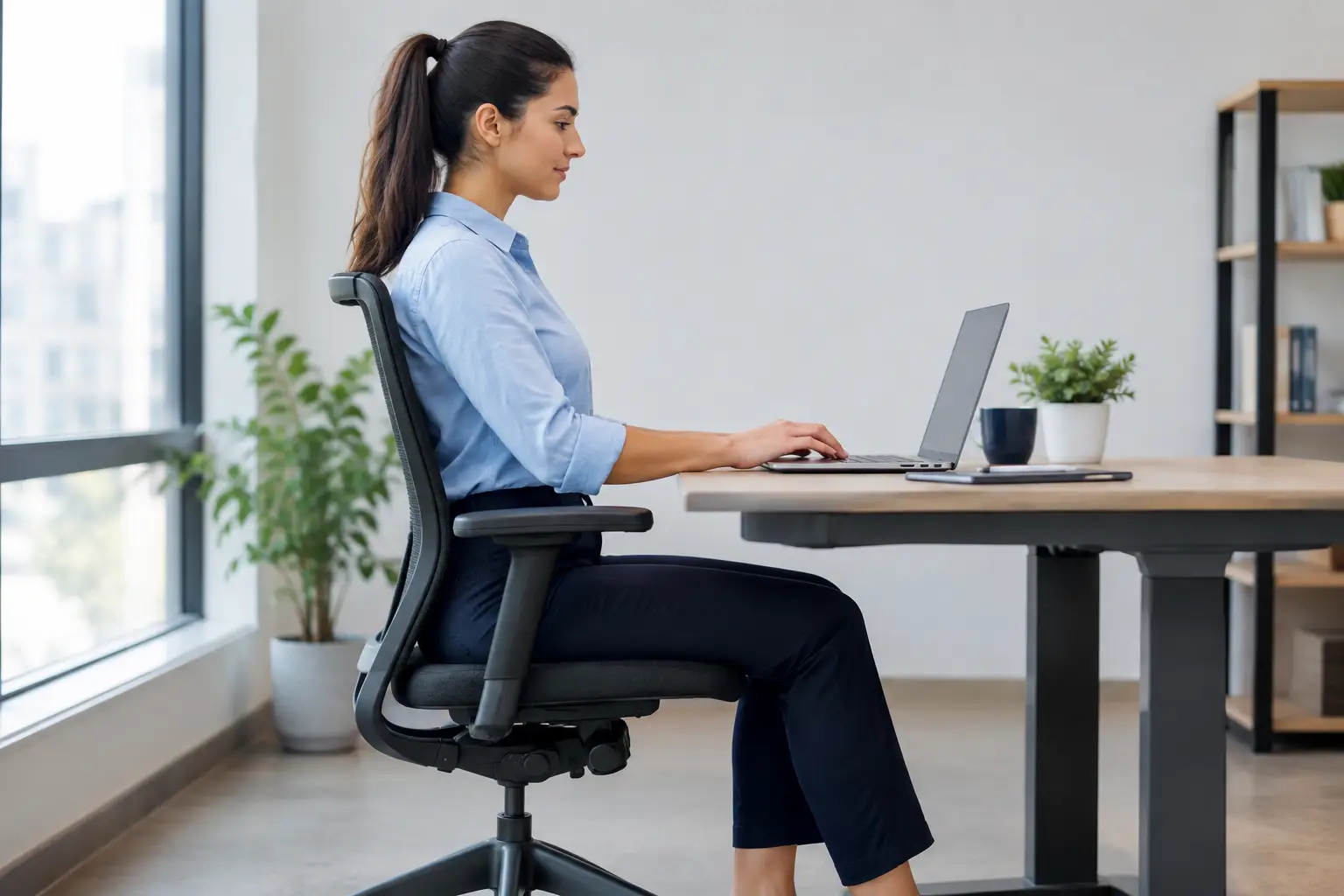
Many people associate body mechanics with sitting up straight, but a comfortable work posture is more flexible than that. Begin by sitting far enough back in your chair that your lower back has support. Keep both feet on the floor or on a stable footrest, and aim to have your knees near hip level or slightly lower.
Place your keyboard and mouse close enough that your elbows can stay relaxed near your sides. Your screen should be positioned so you do not need to constantly lean forward or tip your head down. If you use a laptop for long stretches, adding a separate keyboard and raising the screen can make a meaningful difference.
The best seated posture is often the next posture. Every 30 to 60 minutes, stand up, take a short walk, roll your shoulders, or gently move your neck and hips. These brief resets can improve circulation and help prevent the stiffness that builds when muscles stay in one position too long.
Standing: Find Balance Instead of Locking Your Joints
When standing, let your weight settle through both feet rather than shifting heavily into one hip. Keep your knees soft instead of locked, and allow your shoulders to relax away from your ears. If you are standing at a counter, workstation, or event for a long time, alternate resting one foot on a low step or rail when available.
Supportive shoes can also influence how your entire body feels. Footwear does not need to be expensive or highly specialized for everyone, but shoes that are worn down, unstable, or poorly suited to your activity may contribute to fatigue. For long periods on hard surfaces, a cushioned mat or more frequent movement breaks can be helpful.
Reaching and Carrying: Keep the Load Close
Reaching repeatedly overhead or far in front of your body can strain the shoulders, upper back, and neck. Store frequently used items between waist and chest height when possible. When you must reach high, use a sturdy step stool rather than stretching through your back or standing on an unstable chair.
When carrying bags, groceries, or equipment, distribute weight when you can. Two lighter bags may feel more manageable than one overloaded bag. A backpack with two straps can be a better option than consistently carrying a heavy tote on one shoulder. If you do carry something on one side, switch sides regularly and avoid holding your shoulder in a tense, elevated position.
Build Movement Into Your Routine
Better body mechanics work best alongside a body that is prepared to move. You do not need an intense exercise program to begin. A regular walking routine, gentle mobility work, and strength exercises appropriate for your current ability can help your muscles provide more support during daily tasks.
Pay attention to the areas that commonly become tight for you. For some people, that may be the chest and front of the hips after long periods of sitting. For others, it may be the calves, shoulders, or upper back. Gentle movement can be useful, but stretching should not feel sharp, forced, or painful. If a particular motion consistently creates symptoms, it is worth getting individualized guidance rather than repeatedly pushing into discomfort.
Sleep and recovery matter, too. Your mattress and pillow should allow you to rest in a position that feels supported, not strained. There is no universally perfect sleep position, but many people find comfort with a pillow that keeps the neck from bending too far up or down and with additional support between or beneath the knees as needed.
When Pain Calls for More Than a Posture Fix
Thoughtful body mechanics can reduce everyday strain, but they are not a cure-all. Pain can have many contributors, including joint irritation, muscle tension, reduced mobility, repetitive stress, past injuries, and the physical effects of stress or poor sleep. If discomfort is persistent, worsening, or limiting the things you enjoy, a personalized assessment can help identify what your body needs.
Seek prompt medical attention for severe pain after a fall or accident, new weakness, numbness that is progressing, loss of bowel or bladder control, fever with back pain, or unexplained weight loss. These symptoms need timely medical evaluation.
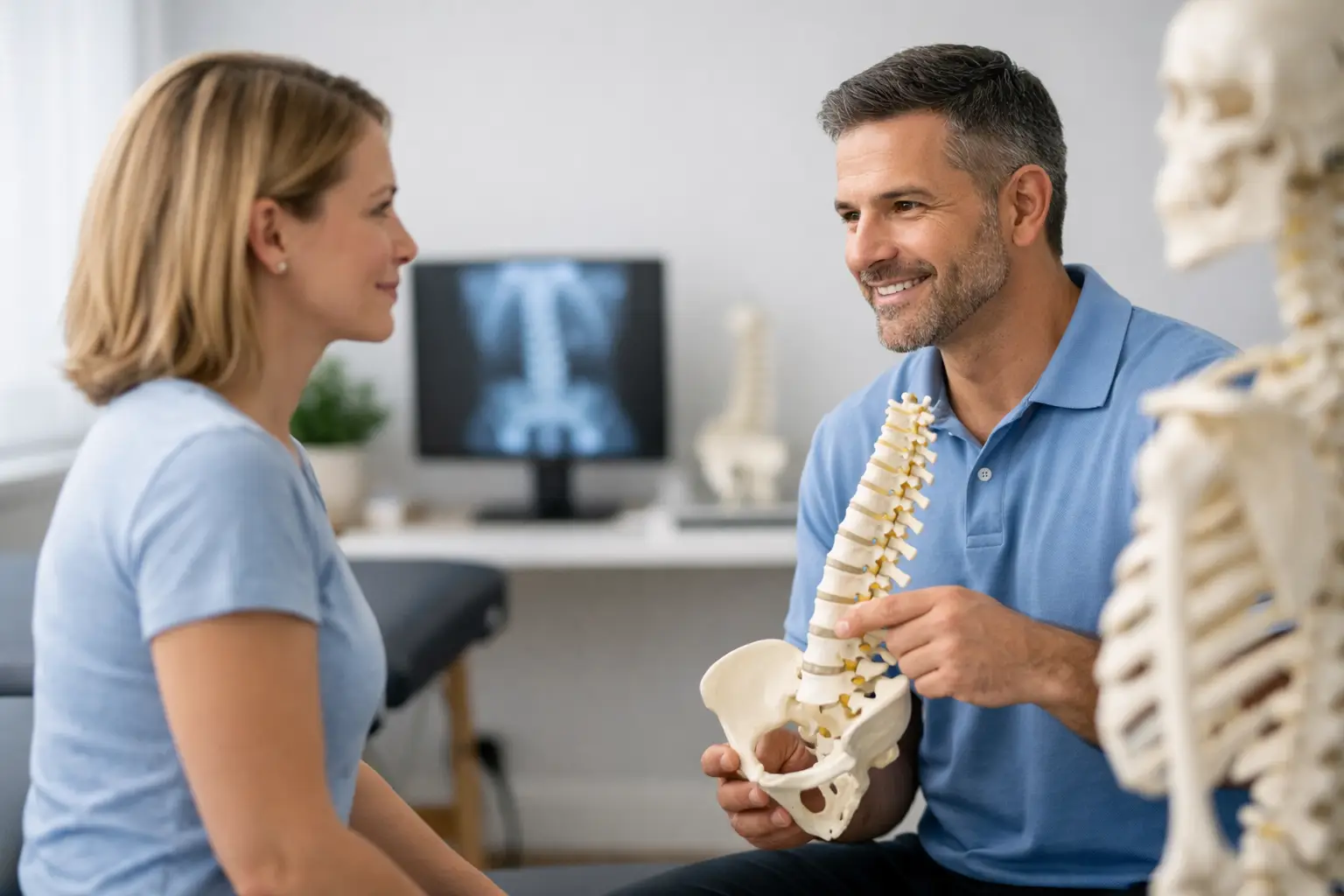
For more common posture-related stiffness, restricted movement, or muscle tension, conservative care may be a supportive part of your wellness plan. At Whole Health Chiropractic, care begins with listening to your concerns, daily routines, and goals. Gentle spinal adjustments, postural analysis, and therapies such as cupping may be considered based on your individual needs, with the aim of improving comfort and helping you move with more confidence.
A healthier movement pattern does not have to begin with a complete overhaul. Start with one moment you repeat every day: how you lift the laundry basket, where you place your monitor, or whether you take a brief walk between tasks. Giving that one movement more attention is a practical way to support your body and continue your journey toward optimal health.