

A guide to spinal decompression can be helpful when back or neck pain starts changing the way you move through your day. Maybe sitting at your desk feels harder than it used to, a long drive leaves you stiff, or you hesitate before lifting your child, exercising, or bending to tie your shoes. Spinal decompression is a conservative approach that may help reduce pressure within the spine for some people, but the right path depends on what is causing your symptoms.
What spinal decompression means
Spinal decompression describes care intended to gently reduce pressure on spinal structures, including the discs, joints, and nerves. It may be provided through a motorized traction table, manual techniques, or specific positions and movements recommended by a qualified provider. The goal is not to force the spine into place. It is to create a more comfortable environment for movement and support the body’s natural healing process.
Your spine has cushioning discs between its vertebrae. These discs help absorb everyday forces from walking, lifting, twisting, and sitting. When a disc becomes irritated, a joint is restricted, or surrounding muscles are tense, you may notice pain, stiffness, or symptoms that travel into an arm or leg.
Non-surgical spinal decompression is often discussed for people with disc-related discomfort, sciatica-like symptoms, degenerative changes, or persistent mechanical back and neck pain. Still, the label alone does not tell you whether it is appropriate. A thoughtful evaluation matters more than a one-size-fits-all treatment plan.
How non-surgical decompression may help
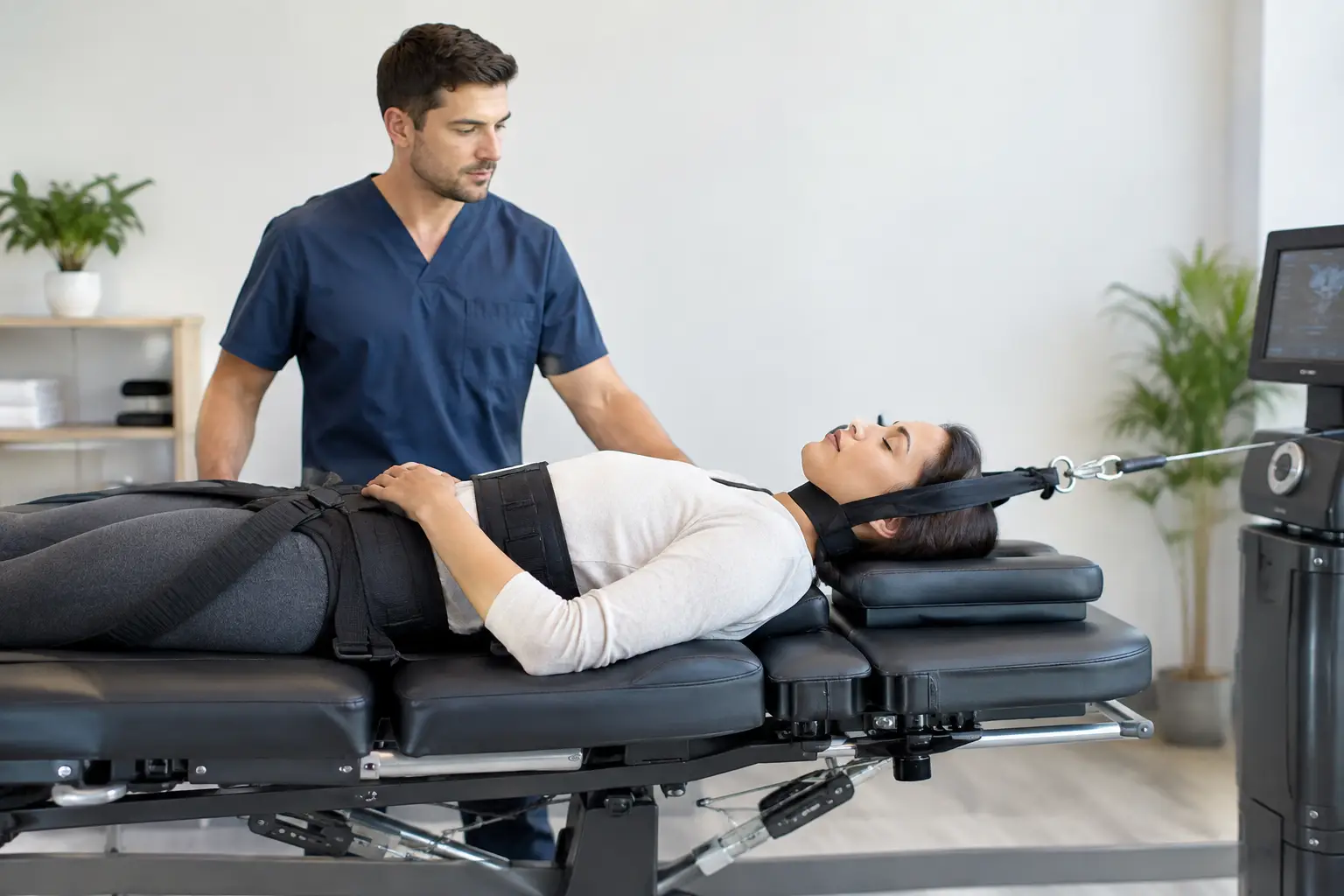
A decompression session commonly uses controlled, gentle traction. The provider applies a carefully measured pulling force to the neck or lower back, often in cycles of tension and rest. This may temporarily change pressure inside the discs and create a sense of relief for some patients.
Potential benefits may include less discomfort, improved range of motion, reduced muscle guarding, and greater confidence with daily activity. If nerve irritation is contributing to pain, reducing mechanical stress may also help ease symptoms such as tingling, burning, or radiating discomfort. Results vary, however. Decompression is not a guaranteed fix, and it generally works best as one part of a broader plan that addresses posture, movement habits, muscle tension, and the physical demands of your routine.
For example, someone whose low back pain flares after long hours of sitting may benefit from decompression along with postural guidance and mobility work. An active adult with stiffness after training may need an assessment of lifting mechanics, hip mobility, and recovery habits. The most useful care begins with understanding the whole picture.
Who may be a good candidate?
People often consider spinal decompression when conservative measures have not fully relieved ongoing neck or back discomfort. You may be a potential candidate if you have pain that worsens with certain positions, feel limited by stiffness, or experience symptoms that seem connected to a known disc or posture-related issue.
A chiropractor should start by listening carefully to your symptoms, health history, daily activities, and goals. They may assess posture, movement, spinal mobility, and areas of muscle tension before recommending care. That conversation helps distinguish between discomfort that may respond to conservative treatment and symptoms that need medical imaging, specialist evaluation, or a different form of care.
Decompression may not be recommended for everyone. Certain fractures, severe osteoporosis, spinal instability, active cancer involving the spine, infection, or some prior surgical situations can make traction inappropriate. Pregnancy, implanted devices, and other health conditions may also require modifications or medical clearance. Honest communication about your history protects your comfort and safety.
What happens during a spinal decompression visit?
Your first visit should feel like a conversation, not a rushed transaction. After an evaluation, your provider will explain what they believe is contributing to your discomfort and whether decompression fits your care plan. You should understand the expected approach, what you may feel during treatment, and how progress will be measured.
If a decompression table is used, you will be positioned comfortably, usually lying down with supportive straps around the pelvis or torso. The table delivers slow, controlled traction to the targeted area. Most patients describe a gentle stretching or pulling sensation rather than pain. Let your provider know right away if you feel sharp pain, worsening numbness, dizziness, or anxiety during the session.
Appointments may also include gentle spinal adjustments, soft-tissue work, cupping therapy, or guided mobility exercises when appropriate. These services are not interchangeable, but they can complement one another. An adjustment may help address joint restriction, while cupping may help ease muscle tension and postural analysis can reveal patterns that keep placing stress on the same areas.
At Whole Health Chiropractic, care is built around your unique needs rather than a preset series of identical visits. Your comfort, response to treatment, and ability to return to the activities that matter to you should guide each next step.
What to expect after treatment
Some people feel looser or more mobile after their first session. Others notice gradual change over several visits as their body adapts and they begin moving with less guarding. Mild temporary soreness can occur, especially if your muscles have been protecting a painful area for some time. Gentle walking, staying hydrated, and following your provider’s activity guidance can be helpful.
Avoid treating short-term relief as permission to return immediately to every aggravating activity. If heavy lifting, prolonged sitting, or repetitive twisting has been part of the problem, your care plan may include practical changes to help prevent the same pattern from returning. Small adjustments, such as taking movement breaks, improving workstation setup, or learning a more comfortable lifting strategy, can support more lasting results.
Progress should be measurable in ways that matter to your life. That might mean sleeping more comfortably, getting through a workday with fewer breaks, turning your head more easily while driving, or returning to a favorite workout with greater confidence. Pain levels matter, but so does function.
When back or neck pain needs prompt medical attention
Conservative chiropractic care can be a valuable option for many musculoskeletal concerns, but some symptoms need urgent medical evaluation. Seek prompt care if you develop new loss of bladder or bowel control, numbness in the groin area, severe or rapidly worsening weakness, unexplained fever, significant trauma, or pain accompanied by unexplained weight loss.
New or worsening pain that travels down an arm or leg also deserves a professional assessment, particularly when it is paired with numbness or weakness. Do not try to stretch through alarming symptoms or rely on online advice to diagnose the cause. Getting the right evaluation early can help you make safer choices about your care.
Making decompression part of a healthier routine
The best guide to spinal decompression is not simply a description of a treatment table. It is a reminder that your spine responds to how you live, work, rest, and move. Decompression may create a valuable window of comfort, but sustainable well-being often comes from pairing care with supportive habits.
Your provider may recommend targeted mobility work, strengthening exercises, improved posture awareness, or changes to your exercise routine. These recommendations should feel realistic for your life. A busy parent may need brief movement breaks and simple home exercises. A desk-based professional may benefit from a workstation review and strategies for reducing all-day tension. An active adult may need guidance on recovery, training load, and mechanics.
You do not have to wait until discomfort takes over your routine to ask for support. A personalized consultation can clarify whether spinal decompression, gentle chiropractic care, or another approach is right for you. With attentive care and a plan that respects your goals, moving with greater comfort can become a meaningful part of your journey toward optimal health.