
A stiff hip can make ordinary moments feel unexpectedly difficult: standing up after a long meeting, getting comfortable in the car, taking a full stride on a walk, or keeping up with your kids. Learning how to ease hip tightness starts with understanding that your hips are not working alone. They share the load with your low back, pelvis, core, knees, and feet, so lasting comfort often comes from looking at the full movement picture.
Hip tightness is common among desk-based professionals, active adults, parents, and anyone whose days require repeated sitting, lifting, training, or standing. The good news is that small, consistent changes can help you move with greater comfort and confidence. The goal is not to force a deep stretch. It is to restore comfortable motion, improve support around the joint, and build habits that help your body feel its best.
Why hips can feel tight
Sometimes hip tightness is simply your body’s response to being in one position for too long. Sitting keeps the hips bent for hours at a time, which can leave the muscles at the front of the hip feeling shortened or guarded when you stand. Long drives, deep couches, and working from a laptop can create the same pattern.
Other times, the tight feeling is less about one muscle and more about compensation. If your low back, pelvis, or upper body is not moving efficiently, your hips may work overtime to create stability. A challenging workout, a sudden increase in walking or running, old injuries, weak glute muscles, and repetitive lifting can also contribute.
This is why one person may feel better after a few gentle stretches while another needs to address posture, movement mechanics, or spinal alignment as well. Tightness is useful information from your body. It is not always a sign that you need to push harder.
How to ease hip tightness without overdoing it
When your hips feel restricted, begin with movement that is calm and controlled. Sharp pain, pinching, numbness, or a sensation that the joint is catching are signals to stop rather than stretch through discomfort. Aim for a mild pulling sensation, not a test of flexibility.
Break up long periods of sitting
A single workout cannot always offset a full day in a chair. Stand, walk around the room, or change positions for a few minutes every 30 to 60 minutes when possible. Even brief movement breaks encourage circulation and remind the hips to move through a more natural range.
Try taking phone calls while standing, parking a little farther away, or setting a quiet reminder to reset your posture. These choices may seem small, but they often matter more than one intense stretching session at the end of the day.
Use gentle hip mobility movements
Start with a short warm-up before you stretch. March in place, take an easy walk, or slowly move your knees up and down while seated. Once your body feels warmer, gentle mobility can help reduce the sense of stiffness.
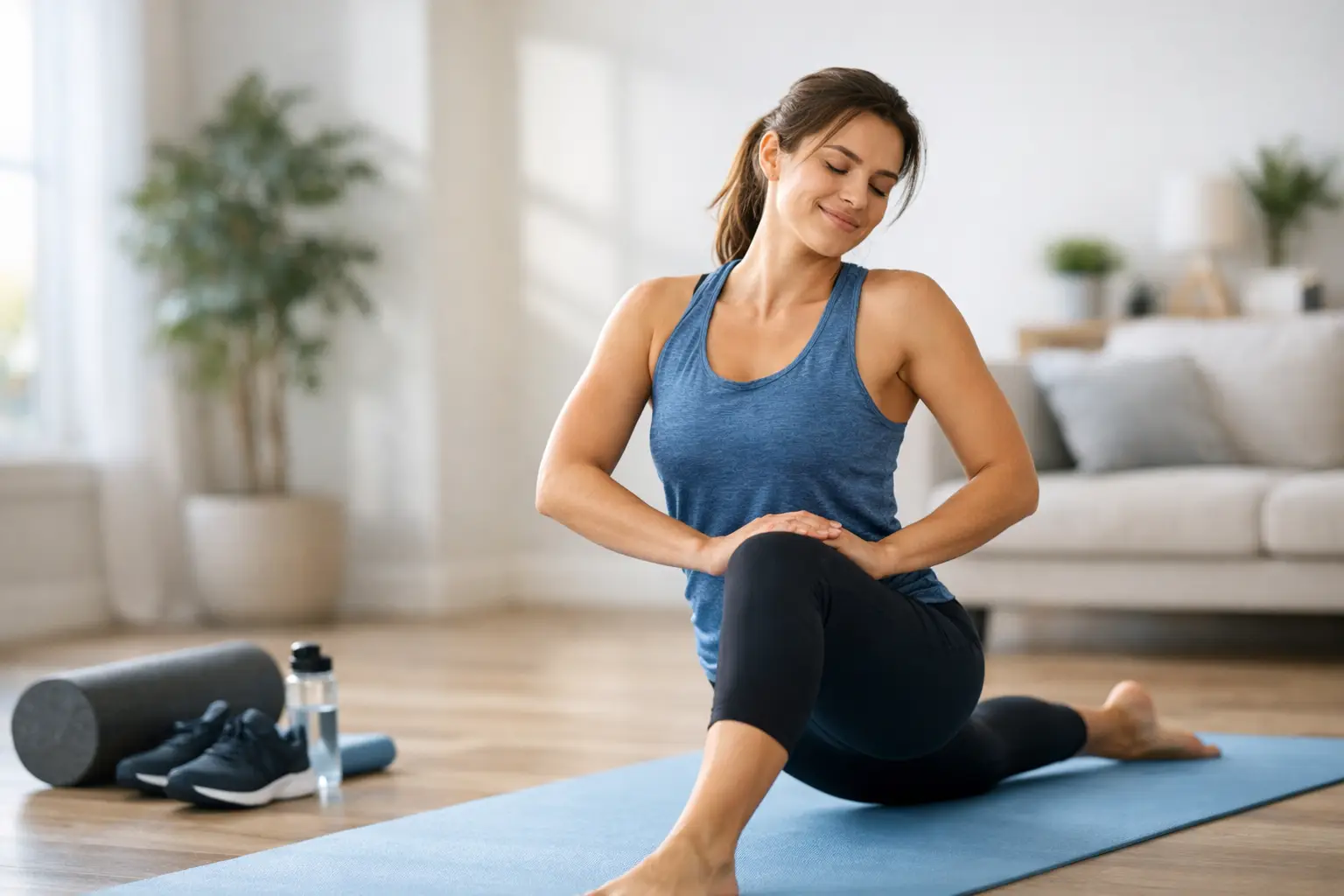
A supported hip flexor stretch is a good option for many people. Step one foot forward into a short split stance, keep your torso tall, and gently shift your weight forward until you feel a light stretch at the front of the back hip. Avoid arching your low back to chase a bigger stretch. Hold for comfortable, steady breaths, then switch sides.
You can also try a figure-four position while seated. Place one ankle over the opposite thigh, keep your spine long, and lean forward only slightly if it feels comfortable. This may create a stretch around the outer hip or glute area. If it causes knee pain or a deep hip pinch, skip it.
Slow hip circles, gentle pelvic tilts, and controlled knee-to-chest movements can be useful, too. The best movement is the one you can do consistently without aggravating symptoms.
Strengthen the support around your hips
Tight muscles are not always weak, and weak muscles are not always tight. Still, better strength and control around the hips can reduce the need for surrounding tissues to brace constantly.
Simple exercises such as bridges, sit-to-stands from a chair, and side-lying leg lifts can build support in the glutes and core when performed with good form. Start with a manageable number of repetitions and focus on smooth control. If your low back takes over during a bridge or you feel pain in the hip joint, adjust the movement or ask a qualified provider to assess your technique.
For active adults, the right balance of mobility and strength is especially valuable. Stretching after a run may feel good, but it may not address a hip that repeatedly tightens because of running form, limited pelvic control, or an abrupt jump in training volume.
Look at the way you stand, sit, and move
Posture is not about holding one rigid “perfect” position all day. Your body benefits from variety. Still, a few adjustments can reduce unnecessary strain.
When sitting, try to keep both feet supported and avoid crossing the same leg for hours. Position your screen closer to eye level when you can, and sit far enough back that you are not constantly reaching forward. When standing, distribute your weight through both feet rather than settling into one hip.
Pay attention to everyday habits as well. Carrying a toddler on the same side, leaning over a counter, sleeping in one position, or always using one shoulder for a heavy bag can influence how your hips and low back feel. You do not need to eliminate every asymmetrical activity. Simply changing sides and giving your body more movement variety can help.
When stretching is not enough
If hip tightness keeps returning despite regular movement, there may be more to explore. The source of discomfort can involve joint motion, muscle tension, posture, spinal mechanics, or movement patterns elsewhere in the body. An individualized assessment can help clarify what your body needs instead of relying on a generic routine.
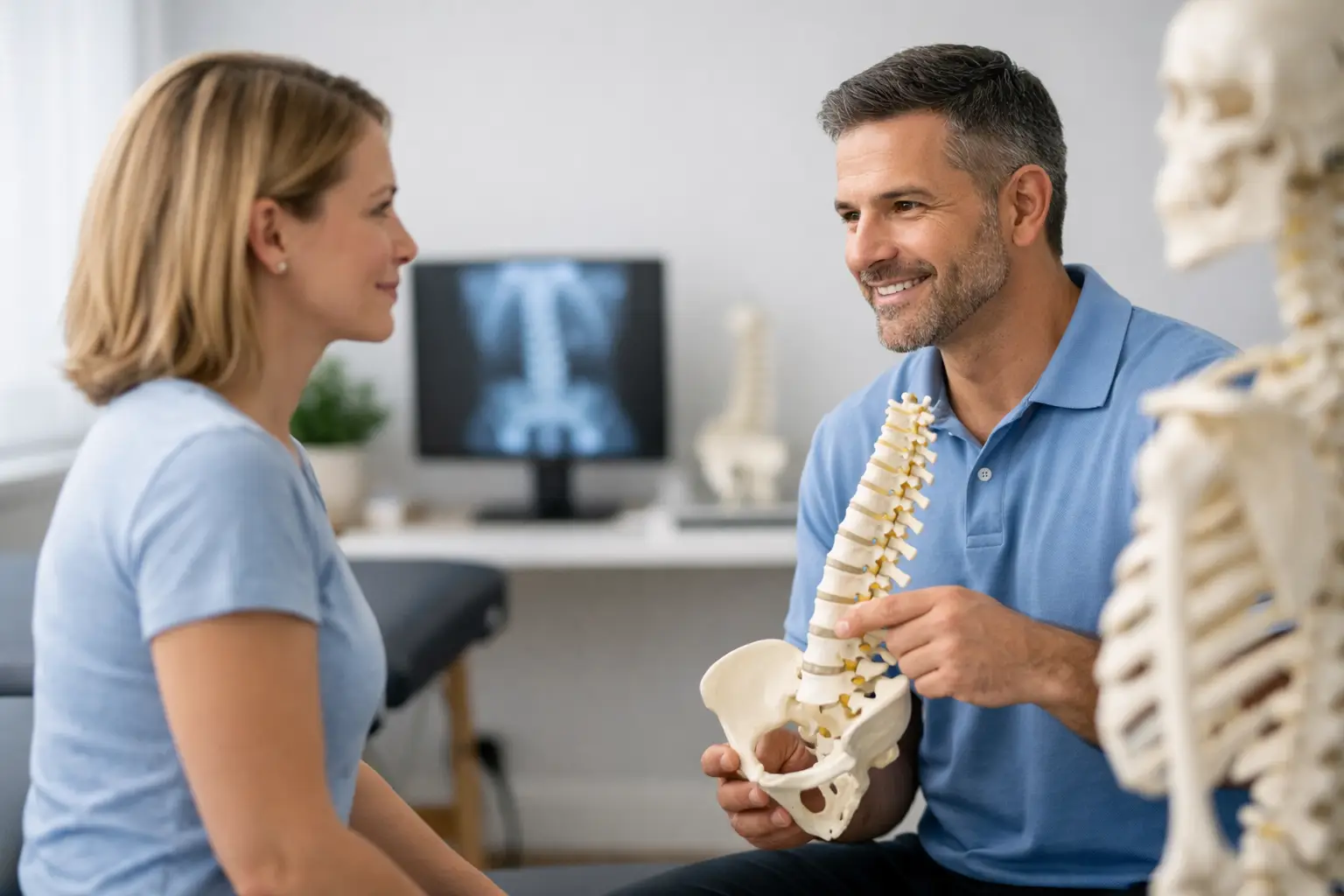
At Whole Health Chiropractic, care begins by listening to your concerns, daily demands, health history, and goals. Gentle spinal adjustments may support healthier alignment and mobility, while postural analysis can identify patterns that may be adding strain to your hips. Cupping therapy may also be recommended when appropriate to help address areas of muscle tension and encourage blood flow.
Personalized care matters because the right approach depends on your symptoms. A parent who feels stiff after lifting and carrying may need a different plan than an office professional with tightness after sitting or an athlete whose hip feels restricted during training. Your care should support not only relief today, but also the movements you want to enjoy tomorrow.
Know when to seek prompt medical attention
Hip tightness does not always indicate a serious problem, but some symptoms deserve timely evaluation. Seek medical care promptly if you have severe or worsening pain, cannot bear weight, notice major swelling or redness, have a fever, experience numbness or weakness, or develop symptoms after a fall or other injury.
It is also wise to schedule an evaluation if pain wakes you at night, travels down the leg, persists for several weeks, or keeps you from work, exercise, or normal daily activities. A careful assessment can help rule out concerns that should not be managed with home stretching alone.
Make comfortable movement part of your routine
You do not need an hour-long mobility routine to care for your hips. Five minutes of walking between meetings, a few supported stretches after a drive, and strength work a couple of times each week can create meaningful change over time. Consistency is more helpful than intensity.
Most of all, be patient with your body. Hip tightness often builds gradually, and it may take time to understand the patterns behind it. With attentive care, smart movement, and support tailored to your needs, you can move toward a more comfortable, active, and vibrant daily life. If your hips continue to feel restricted, a personalized consultation can be a reassuring next step on your journey toward optimal health.